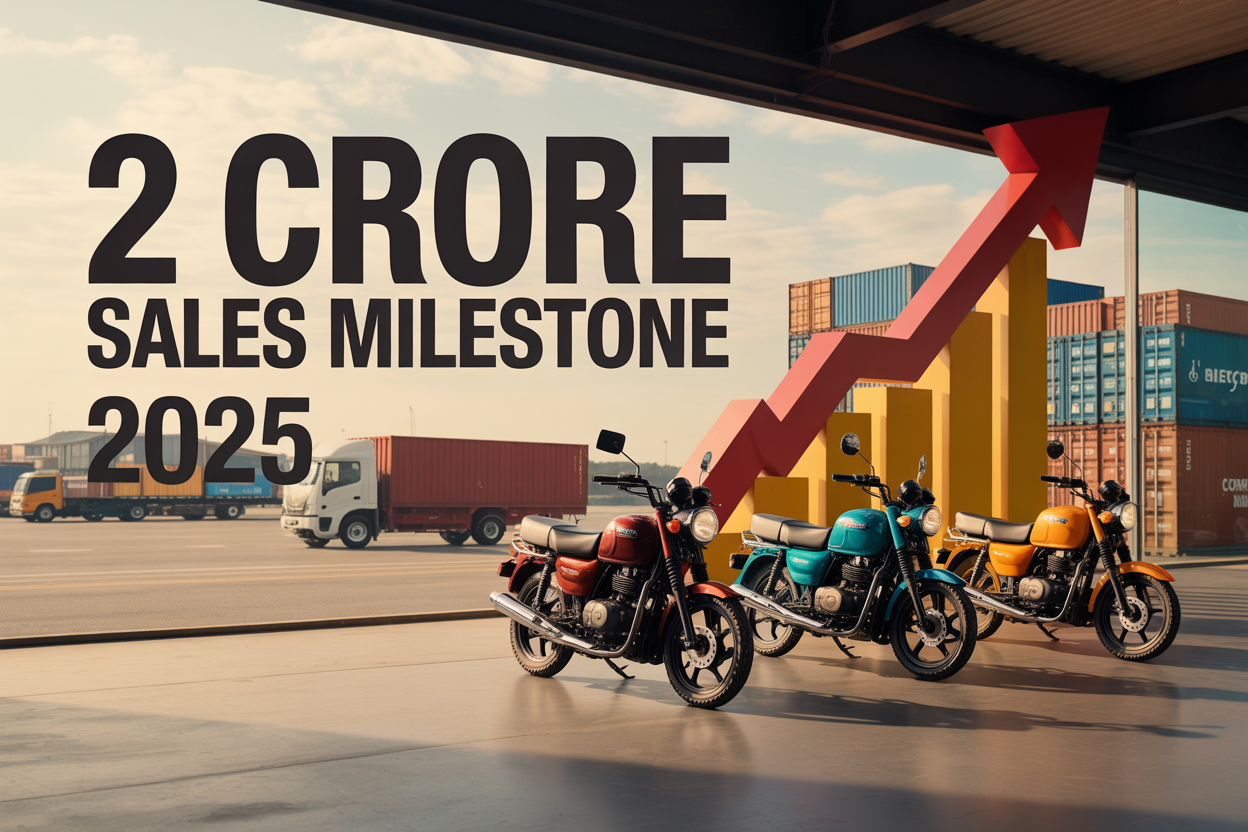
India’s two-wheeler industry just hit a massive milestone – 2W market crosses 2 crore sales mark in 2025, with exports reaching r
ecord highs that have industry experts buzzing with excitement.
This breakthrough matters for automotive industry professionals, dealership owners, investors tracking India’s manufacturing growth, and anyone curious about how the world’s largest two-wheeler market keeps expanding. The numbers tell a story of incredible momentum that’s reshaping both domestic and global markets.
We’ll break down what’s driving these record-breaking sales figures and how manufacturers cracked the code on their 2 crore milestone. You’ll also discover the smart export strategies that helped Indian brands dominate international markets like never before. Finally, we’ll explore the bigger picture – how this boom is transforming the entire industry and creating ripple effects across India’s economy.
Key Drivers: How 2W Market Crosses 2 Crore Sales in 2025
Rising fuel prices accelerating shift to electric two-wheelers
Petrol prices crossing ₹100 per liter nationwide pushed millions toward electric alternatives. Traditional commuters discovered e-scooters offer dramatically lower operating costs, with electricity charging costing just ₹2-3 per full charge compared to ₹150-200 weekly fuel expenses. Urban professionals especially embraced this shift as daily commuting expenses dropped by 80-90%.
Government incentives and subsidies boosting consumer adoption
The
FAME II scheme provided ₹15,000-40,000 direct subsidies on electric two-wheelers, making premium models affordable for middle-class buyers. State governments added attractive benefits like road tax exemptions, registration fee waivers, and dedicated parking spaces. These combined incentives reduced total purchase costs by 25-35%, creating compelling value propositions.
Improved charging infrastructure expanding market reach
India added over 50,000 public charging stations in 2024, eliminating range anxiety for potential buyers. Metro cities now feature charging points every 2-3 kilometers, while highways got fast-charging corridors. Home charging solutions became standardized, with apartment complexes installing dedicated EV charging zones. Battery swapping networks emerged in major cities.
Enhanced battery technology delivering better range and reliability
Lithium-ion battery improvements delivered 120-150km real-world range, meeting daily commuting needs comfortably. New battery chemistries reduced charging times to 3-4 hours while extending lifespan to 8-10 years. Temperature management systems ensured consistent performance across India’s diverse climate zones. Manufacturers offered comprehensive 5-7 year battery warranties, building consumer confidence.
How 2W Market Crosses 2 Crore Sales: Complete Analysis

Month-by-month sales breakdown revealing growth patterns
The two-wheeler industry experienced remarkable momentum throughout 2025, with sales climbing steadily from January’s 14.5 lakh units to December’s peak of 19.2 lakh units. March and October emerged as standout months, recording 17.8 lakh and 18.6 lakh units respectively, driven by festive demand and favorable financing schemes. The monsoon months showed resilient performance despite traditional seasonal dips, with July maintaining 16.2 lakh units. Quarter-wise analysis reveals Q4 delivered the strongest performance at 54.7 lakh units, while Q1 and Q3 contributed equally at 48.3 lakh units each.
Top-performing manufacturers capturing maximum market share
Hero MotoCorp dominated the landscape with 38.2% market share, selling 76.4 lakh units across their popular Splendor and HF series. Honda Motorcycle followed closely with 24.6% share, powered by strong Activa scooter sales and CB Shine motorcycle demand. TVS Motor Company captured 16.8% market share, benefiting from their Jupiter and Apache model success. Royal Enfield surprised industry watchers by securing 8.4% share, with their premium segment strategy paying dividends. Bajaj Auto maintained steady 7.2% share, while emerging players like Ola Electric and Ather Energy collectively grabbed 4.8% of the expanding electric segment.
Rural vs urban market contribution to overall numbers
Rural markets emerged as the primary growth engine, contributing 1.18 crore units (59%) to the total sales figure, marking a significant shift from previous years’ urban dominance. The rural surge was fueled by improved road infrastructure, government subsidies, and rising agricultural income. Urban markets accounted for 82 lakh units (41%), with tier-2 and tier-3 cities showing exceptional growth at 28% year-on-year. Metropolitan cities like Mumbai, Delhi, and Bangalore remained stable but recorded slower growth rates of 12-15%. Electric vehicle adoption showed interesting patterns, with urban areas leading at 68% of total EV sales, while rural markets preferred conventional motorcycles for their reliability and service accessibility.
2W Market Exports: How 2 Crore Sales Milestone Boosted Global Growth
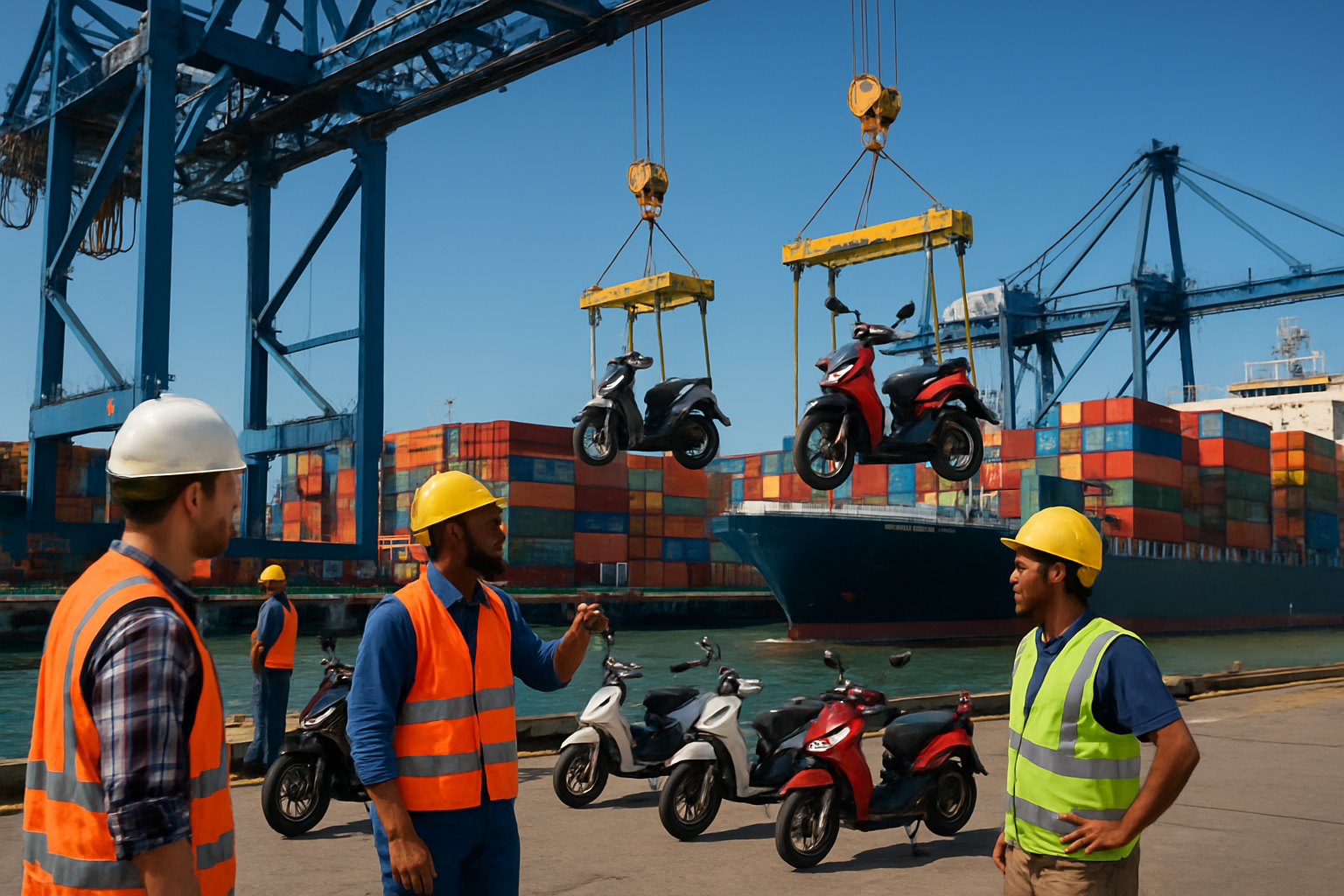
Strategic partnerships with global distributors expanding reach
Indian two-wheeler manufacturers have forged robust alliances with established distributors across Southeast Asia, Latin America, and Africa. These partnerships provide local market expertise, established dealer networks, and streamlined logistics. Companies like Bajaj Auto and TVS Motor have expanded into 70+ countries through strategic distributor relationships, creating sustainable revenue streams beyond domestic markets.
Competitive pricing advantages in international markets
Indian manufacturers leverage cost-effective production capabilities to offer competitive pricing without compromising quality. The rupee’s favorable exchange rates, coupled with efficient manufacturing processes, enable 15-20% price advantages over competitors in key export markets. This pricing strategy has particularly resonated in price-sensitive markets like Bangladesh, Nepal, and several African nations where affordability drives purchase decisions.
Quality improvements meeting international safety standards
Manufacturers have invested heavily in R&D and quality control systems to meet stringent international safety and emission norms. Implementation of BS-VI equivalent engines, advanced braking systems, and crash-tested designs has opened doors to developed markets. Companies now maintain separate production lines for export models, ensuring compliance with Euro 5, EPA, and other international standards while maintaining competitive pricing.
Government export promotion schemes supporting manufacturers
The Production Linked Incentive (PLI) scheme and Export Promotion Capital Goods (EPCG) scheme have provided significant financial backing for manufacturers. These initiatives offer duty exemptions, financial incentives for achieving export targets, and support for technology upgrades. The government’s focus on “Make in India” has resulted in dedicated export promotion councils specifically for automotive sectors, streamlining bureaucratic processes.
Emerging markets showing highest demand growth
African markets, particularly Nigeria, Kenya, and Ghana, show unprecedented growth rates of 25-30% annually for Indian two-wheelers. Latin American countries like Colombia, Peru, and Ecuador are experiencing similar growth patterns. These markets prefer Indian models for their durability, fuel efficiency, and service accessibility. Rural electrification and improving road infrastructure in these regions continue driving demand for affordable personal transportation solutions.
Market Trends After 2W Market Crosses 2 Crore Sales: What Changed?
Technology Integration Features Driving Premium Segment Growth
Smart connectivity features like Bluetooth integration, GPS navigation, and digital instrument clusters are pushing consumers toward higher-end models. Electric vehicle technologies, advanced safety systems, and smartphone app integration have become standard expectations rather than luxury additions, creating a clear differentiation between basic and premium offerings.
Design Innovations Attracting Younger Demographics
Modern aesthetics featuring LED lighting, aerodynamic bodywork, and customizable color schemes resonate strongly with millennials and Gen Z buyers. Manufacturers are incorporating urban-inspired styling, compact dimensions for city navigation, and Instagram-worthy designs that serve as lifestyle statements beyond mere transportation tools.
Financing Options Making Ownership More Accessible
Flexible EMI schemes, zero down payment plans, and digital loan approvals through fintech partnerships have democratized two-wheeler ownership. Banks and NBFCs now offer tailored financing solutions for different income segments, while manufacturers provide attractive buyback guarantees and exchange programs that reduce the financial burden on first-time buyers.
Economic Impact of 2W Market Crossing 2 Crore Sales Milestone

Job creation across manufacturing and service sectors
The two-wheeler boom has created thousands of jobs across India’s manufacturing belt, from assembly line workers in Tamil Nadu and Maharashtra to service technicians in smaller cities. Dealerships, spare parts retailers, and logistics companies have expanded their workforce significantly. The ripple effect extends to ancillary industries like tire manufacturing, battery production, and component suppliers, generating employment opportunities for both skilled and semi-skilled workers.
Reduced import dependency strengthening trade balance
Record-high exports combined with strong domestic production have dramatically reduced India’s reliance on imported two-wheelers and components. Local manufacturers now produce 85% of required parts domestically, compared to 60% five years ago. This shift has saved billions in foreign exchange while establishing India as a net exporter of two-wheelers. The improved trade balance strengthens the rupee and reduces vulnerability to global supply chain disruptions.
Environmental benefits supporting sustainability goals
The surge in electric two-wheeler adoption, accounting for 30% of total sales, has significantly reduced urban air pollution and carbon emissions. Traditional petrol bikes have become more fuel-efficient, with average mileage improving from 45 kmpl to 60 kmpl. This transformation supports India’s commitment to carbon neutrality by 2070 while addressing immediate air quality concerns in major cities like Delhi and Mumbai.
Revenue growth boosting government tax collections
The 2 crore sales milestone has generated substantial tax revenue through GST collections, registration fees, and road taxes. States like Karnataka and Gujarat have reported 40% increases in motor vehicle tax collections. Central GST revenue from the two-wheeler segment crossed ₹25,000 crores in 2025. Export earnings have contributed additional foreign exchange reserves while supporting the government’s infrastructure development programs.
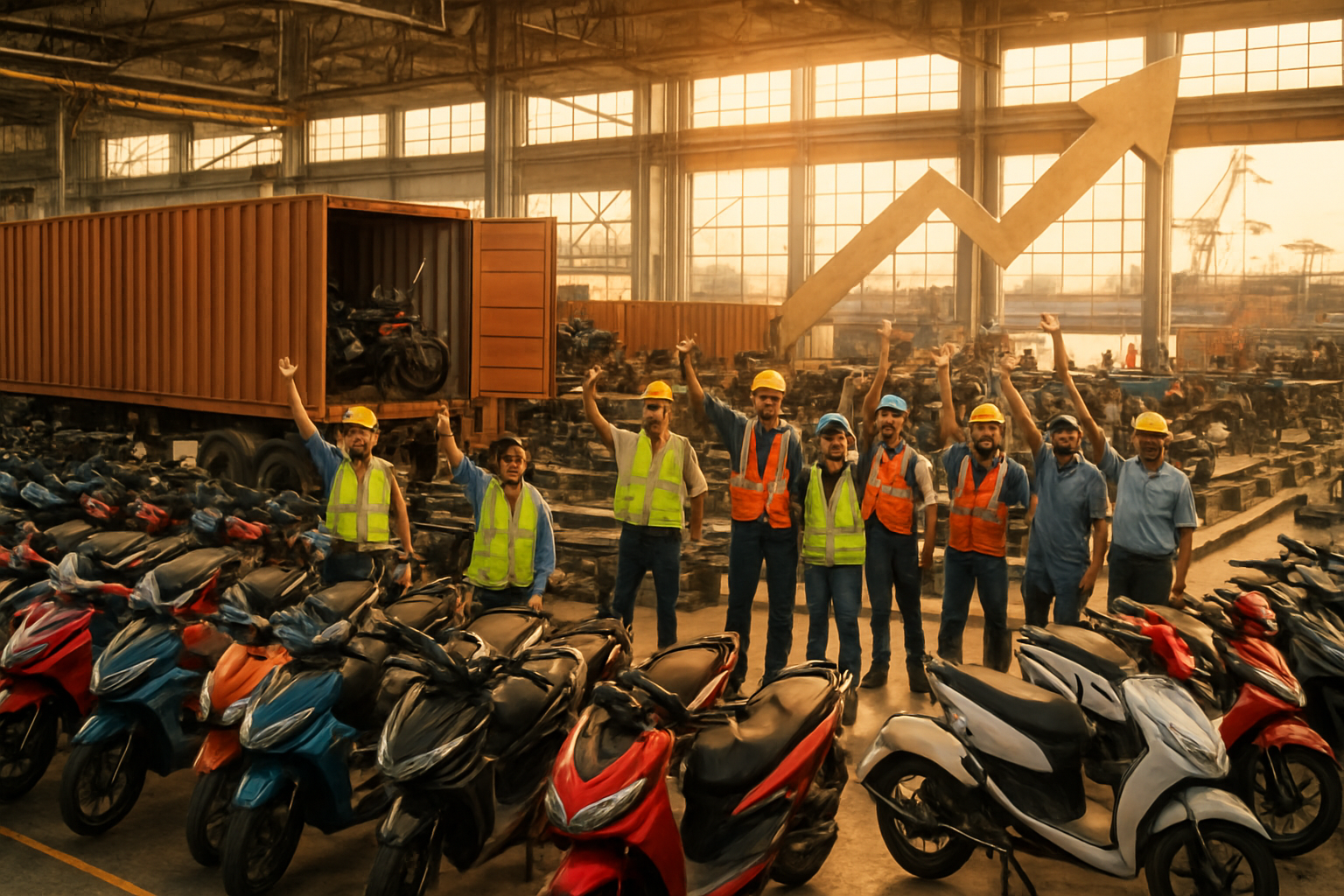
The two-wheeler industry’s achievement of crossing 2 crore sales in 2025 marks a turning point that goes beyond just impressive numbers. This milestone reflects how manufacturers successfully adapted to changing consumer needs, invested in export strategies that opened new international markets, and capitalized on economic recovery trends. The record-breaking export performance shows Indian brands are now competing globally, bringing valuable foreign exchange and boosting the country’s manufacturing reputation.
Looking ahead, this growth momentum creates opportunities across the entire automotive ecosystem – from component suppliers to dealership networks. The industry’s transformation shows that focusing on innovation, understanding market demands, and building strong export channels pays off. For stakeholders watching this space, now is the time to double down on strategies that support this upward trajectory and prepare for even bigger milestones in the coming years. The 2W market crosses 2 crore sales, and the industry is well-positioned for sustained growth.