


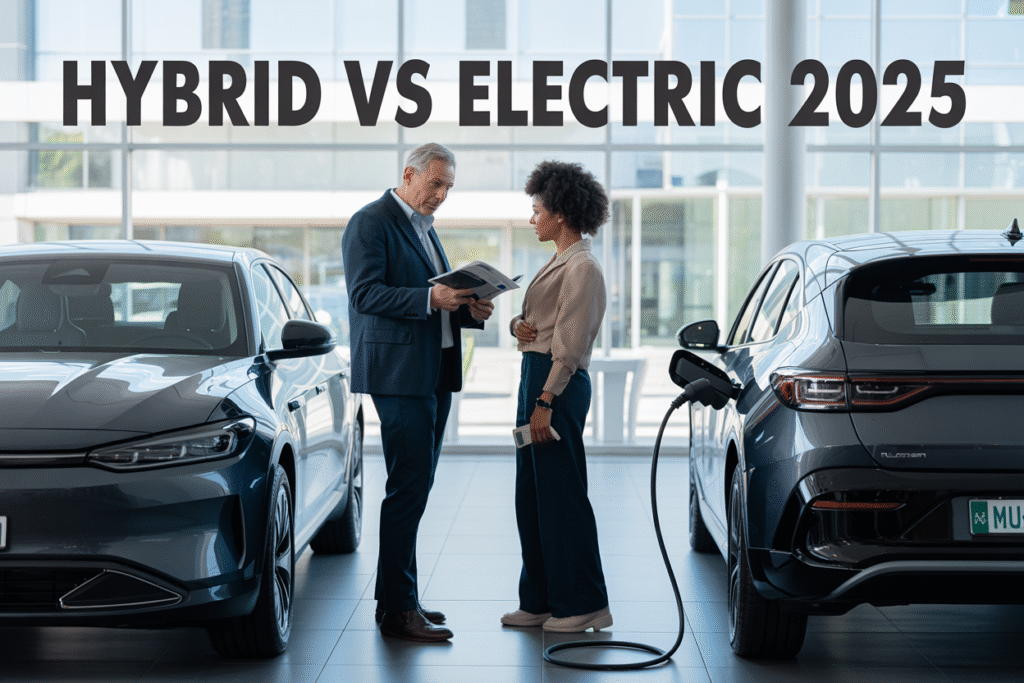
Choosing between hybrid vs electric cars 2025 has never been more complex—or more important for your wallet and the planet. This guide is for car buyers ready to ditch gas but unsure which electrified path makes the most sense for their specific situation.
New federal incentives, expanded charging networks, and game-changing battery technology are reshaping the electric vehicle vs hybrid technology landscape. Whether you’re commuting 20 miles or 200 miles daily, the right choice depends on your unique driving patterns and priorities.
We’ll break down the real-world cost differences between hybrids and EVs, including hidden expenses most buyers miss. You’ll also discover how your daily routine should drive your decision, from apartment dwellers without home charging to road trip enthusiasts who need maximum flexibility. Finally, we’ll help you weigh the environmental trade-offs and future-proof your investment against rapidly evolving automotive technology.
Understanding the Key Differences Between Hybrid and Electric Vehicles
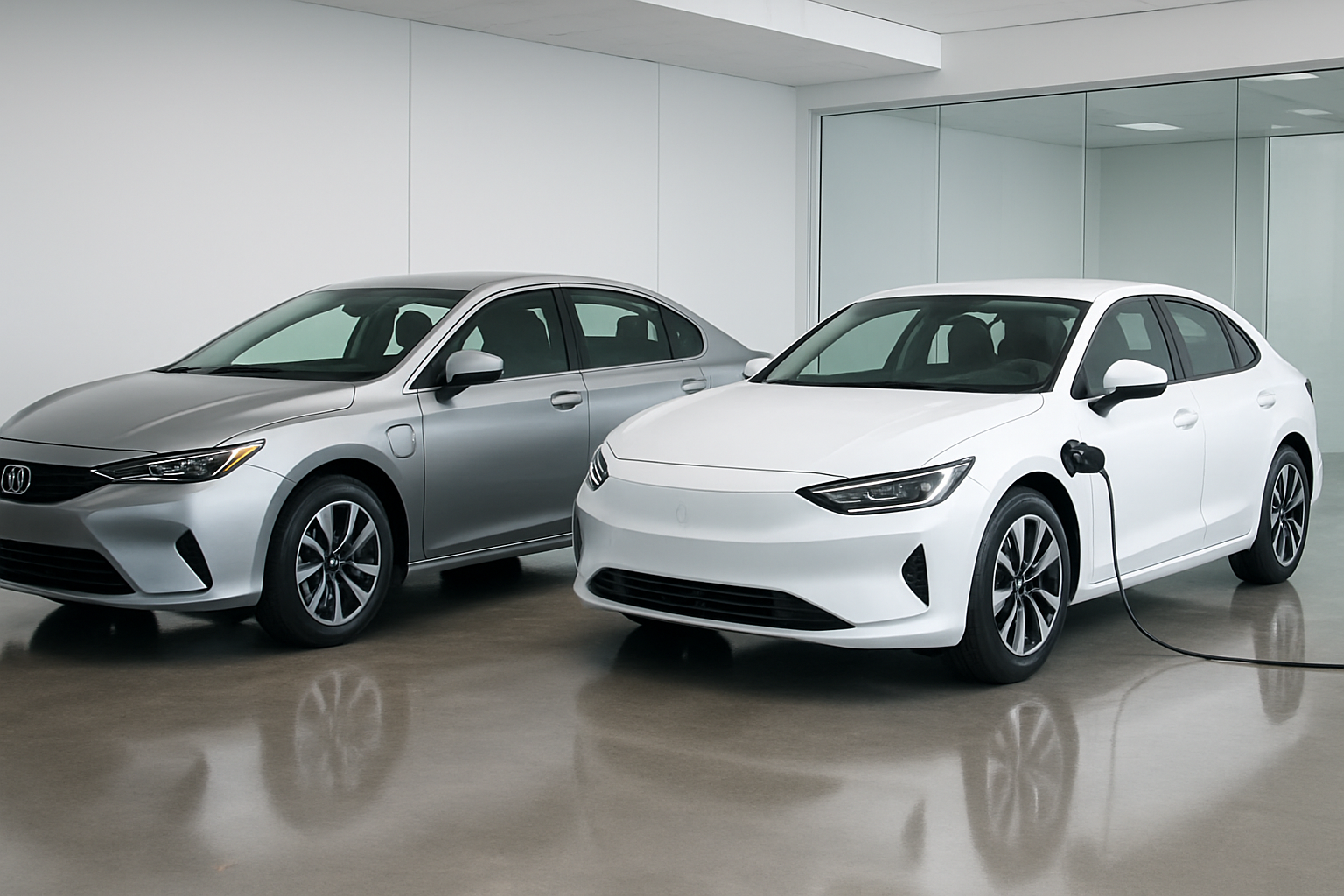

How hybrid powertrains combine gas and electric motors
Hybrid vehicles work like a well-choreographed dance between two power sources. The gasoline engine handles most highway driving, while the electric motor kicks in during city stops and starts. When you brake, the electric motor actually reverses its role and becomes a generator, capturing energy that would otherwise be lost as heat.
The battery in a hybrid is much smaller than what you’ll find in pure electric vehicles – typically around 1-2 kWh compared to 50-100+ kWh in EVs. This smaller battery can’t power the car for extended distances on its own, but it’s perfect for short bursts of acceleration and low-speed driving around town.
Most hybrids use what’s called a “series-parallel” system. At low speeds, the electric motor does most of the work. During acceleration, both motors team up for maximum power. On the highway, the gas engine takes over while the electric motor stays ready to assist. The computer brain managing all this switches between these modes seamlessly – you won’t even notice the transitions.
Pure electric vehicle technology and battery-only operation
Electric vehicles strip away the complexity of dual powertrains entirely. One large battery pack powers electric motors that turn the wheels – that’s it. The simplicity is beautiful: no oil changes, no transmission fluid, no spark plugs, and far fewer moving parts to maintain.
The heart of any EV is its lithium-ion battery pack, which stores enough energy to power your daily drives and then some. These batteries charge through a port on the outside of the car, connecting to everything from your home wall outlet to high-speed DC fast chargers.
Electric motors deliver their full torque instantly, creating that famous “EV whoosh” feeling when you accelerate. Unlike gas engines that need to rev up to reach peak power, electric motors respond immediately to your accelerator input. This instant response makes even basic EVs feel surprisingly quick around town.
The regenerative braking in EVs is also more aggressive than in hybrids. When you lift off the accelerator, the motor immediately starts generating electricity, slowing the car down while adding range back to the battery. Many EV drivers rarely use their brake pedal in normal city driving.
Range capabilities and charging requirements comparison
Range anxiety remains a real consideration when choosing between hybrid and electric cars 2025. Hybrids typically offer 500-600 miles of total range before needing to stop for gas, matching traditional cars. The electric portion alone might give you 20-50 miles in a plug-in hybrid, but the gas engine eliminates any worry about finding charging stations.
Pure electric vehicles have made huge strides in range. Most new EVs offer 250-350 miles per charge, with premium models pushing 400+ miles. However, real-world range varies significantly based on weather, driving style, and terrain use.
| Vehicle Type | Typical Range | Refueling/Charging Time |
|---|---|---|
| Traditional Hybrid | 500-600 miles | 5 minutes (gas station) |
| Plug-in Hybrid | 20-50 miles (electric) + 400+ miles (total) | 2-4 hours (home charging) |
| Battery Electric | 250-400 miles | 20-45 minutes (fast charging) |
Charging infrastructure continues expanding rapidly. Home charging works for most daily driving, but longer trips require planning around public charging networks. Fast chargers can add 200+ miles in 30 minutes, though charging speeds slow down as the battery approaches full capacity.
Performance differences in acceleration and driving experience
The performance gap between hybrid electric vehicles and pure EVs is narrower than many people think, but the experiences feel distinctly different. Hybrids offer smooth, efficient acceleration that’s perfectly adequate for daily driving. The transition between electric and gas power is nearly imperceptible in well-designed systems.
Electric vehicles deliver a fundamentally different driving experience. That instant torque creates remarkable acceleration from standstill – even basic EVs often outpace sports cars in 0-30 mph sprints. The lack of engine noise creates an almost serene cabin environment, though some drivers miss the auditory feedback of a traditional engine.
Handling characteristics also differ. EVs typically place their heavy battery packs low in the chassis, creating a lower center of gravity that improves cornering stability. Hybrids carry the weight penalty of both powertrains, though the difference is less noticeable in daily driving than on paper.
One overlooked aspect is the driving smoothness. EVs eliminate the vibrations and subtle power delivery variations that come with internal combustion engines. Every acceleration feels perfectly linear and predictable, creating a refined driving experience that many find addictive once they experience it regularly.
Evaluating Your Daily Driving Needs and Lifestyle
Calculating your average daily mileage requirements
Your daily driving habits play a crucial role in the hybrid vs electric cars 2025 decision. Start by tracking your mileage for at least two weeks, including commutes, errands, and weekend activities. Most people drive between 30-50 miles per day, making both options viable, but the specifics matter.
Electric vehicles typically offer 250-400+ miles of range, easily covering daily needs for most drivers. However, if you regularly drive 100+ miles daily, you’ll need to factor in charging time and availability. Hybrids eliminate range anxiety completely since they can switch to gasoline when needed.
Create a simple daily driving log:
- Work commute (round trip)
- School drop-offs and pickups
- Grocery shopping and errands
- Recreation and social activities
- Unexpected trips
If your daily average stays under 200 miles, an EV can handle your routine without stress. Higher mileage drivers might find hybrids more convenient, especially during busy weeks when charging time becomes a constraint.
Assessing access to home and public charging infrastructure
Home charging access dramatically influences the electric car vs hybrid daily driving experience. If you own a home with a garage or dedicated parking spot, installing a Level 2 charger makes EV ownership incredibly convenient. You’ll wake up to a “full tank” every morning.
Apartment dwellers face bigger challenges. While public charging networks are expanding rapidly, relying solely on them requires more planning. Research these factors:
Home charging considerations:
- Electrical panel capacity for 240V outlet installation
- HOA restrictions and rental agreements
- Installation costs ($500-2,000 for Level 2 charging)
- Utility rates and time-of-use pricing
Public charging landscape:
- Workplace charging availability
- Fast-charging stations along regular routes
- Grocery stores and shopping centers with chargers
- Charging network reliability in your area
Hybrid vehicles need no charging infrastructure, making them perfect for renters or those without reliable charging access. They work like traditional cars while still offering excellent fuel economy.
Considering long-distance travel frequency and patterns
Road trip habits significantly impact your choosing between hybrid and electric vehicles decision. Electric vehicles excel for daily driving but require more planning for longer journeys.
Analyze your travel patterns:
- Monthly long-distance trips (200+ miles)
- Vacation destinations and routes
- Spontaneous weekend getaways
- Business travel requirements
Modern EVs handle most road trips well, but you’ll need to plan charging stops every 2-4 hours. Fast-charging networks along major highways make this manageable, though it adds 20-45 minutes to your journey compared to quick gas fills.
EV road trip considerations:
- Route planning apps for charging stops
- Seasonal range reduction (10-20% in cold weather)
- Charging speed variations by location
- Backup charging options
Hybrids shine for frequent long-distance drivers. No range anxiety, quick refueling, and the flexibility to take any route make them ideal for spontaneous travelers or those who regularly drive beyond major highway corridors.
Your travel style matters too. Patient planners who enjoy breaks often adapt well to EV road trips, while drivers who prefer non-stop efficiency typically favor hybrids for longer journeys.
Financial Considerations and Total Cost of Ownership

Upfront Purchase Prices and Available Incentives
The sticker price tells only part of the story when comparing hybrid vs electric cars 2025. Electric vehicles typically carry higher upfront costs, with most new EVs starting around $30,000-$35,000 after federal tax credits. Premium electric models can easily reach $50,000-$80,000. Hybrids generally cost $2,000-$5,000 more than their gas-only counterparts, making them more accessible for budget-conscious buyers.
Federal tax credits significantly impact the electric car vs hybrid cost comparison. New EV buyers can claim up to $7,500 in federal credits, while used EVs qualify for up to $4,000. Most hybrids don’t qualify for federal incentives, though some plug-in hybrids can claim partial credits. Many states sweeten the deal with additional rebates, reduced registration fees, or HOV lane access.
Manufacturer incentives and lease deals often favor electric vehicles. Automakers frequently offer cash rebates, low-interest financing, or heavily subsidized lease rates to boost EV adoption. These promotions can reduce the effective purchase price gap between hybrids and electrics substantially.
Fuel Savings Versus Electricity Costs Over Time
Your hybrid electric vehicle total cost ownership heavily depends on local fuel and electricity rates. The average American spends about $2,000 annually on gasoline. Electric vehicle owners typically see 60-80% lower “fuel” costs, saving $1,200-$1,600 per year based on current national averages.
Hybrid owners enjoy significant but smaller savings, typically reducing fuel costs by 40-50% compared to conventional vehicles. A hybrid driver might save $800-$1,000 annually on gas, depending on their specific model’s efficiency and driving patterns.
Electricity rates vary dramatically by region and time of day. States like Washington and Idaho offer cheap hydroelectric power, while Hawaii and California face premium rates. Smart EV owners install time-of-use meters and charge overnight when rates drop by 50% or more. Many utilities offer special EV rate plans that reduce charging costs even more.
Maintenance Expenses and Warranty Coverage Differences
Electric vehicles shine in the maintenance department. EVs have roughly 20 moving parts compared to 2,000+ in internal combustion engines. No oil changes, spark plugs, timing belts, or transmission services mean EV owners save $400-$800 annually on routine maintenance.
Hybrids fall somewhere in the middle, requiring regular maintenance for their gas engines but less frequently than conventional cars. Hybrid-specific components like battery cooling systems and regenerative braking systems need occasional attention, but major repairs remain uncommon during the warranty period.
Battery warranties provide peace of mind for both technologies. Most EV manufacturers offer 8-year/100,000-mile battery warranties, while hybrid batteries typically carry similar coverage. Replacement costs have dropped significantly, with aftermarket options available for older vehicles.
Tire wear patterns differ between the technologies. Electric vehicles’ instant torque can accelerate tire wear, especially on performance models. Hybrids and efficient EVs often use low-rolling-resistance tires that may cost slightly more to replace but last longer.
Resale Value Projections for 2025 and Beyond
The resale value landscape for choosing between hybrid and electric vehicles is rapidly evolving. Electric vehicles historically faced steep depreciation, but newer models with improved range and charging infrastructure show stronger value retention. Tesla continues leading EV resale values, while mainstream manufacturers like Hyundai and Kia are building solid reputations.
Hybrid resale values remain stable and predictable. Established models like the Toyota Prius and Honda Accord Hybrid maintain strong resale performance due to proven reliability and broad market acceptance. Their lower purchase prices and proven longevity appeal to used car buyers.
Market trends strongly favor electric vehicles for future value retention. Government mandates requiring automaker EV sales percentages will flood the market with new electric options while potentially limiting hybrid availability. As charging infrastructure expands and battery costs continue falling, electric vehicles should maintain better long-term values.
Geographic location significantly impacts resale values. Electric vehicles hold value better in California, the Pacific Northwest, and Northeast states where charging infrastructure is robust and environmental consciousness drives demand. Rural areas with limited charging options may see weaker EV resale markets through 2025 and beyond.
Environmental Impact and Sustainability Goals
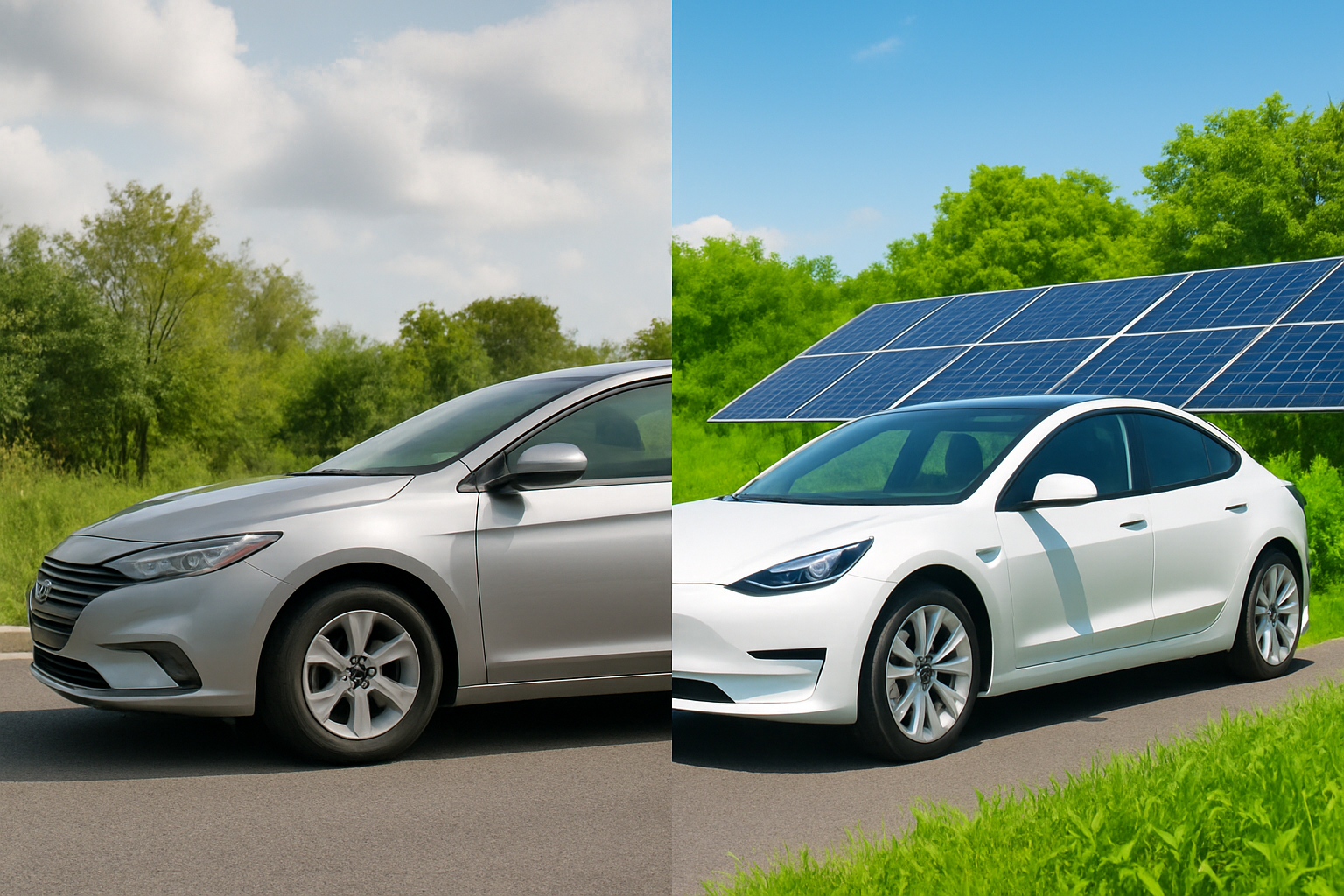
Carbon Footprint Comparison Between Hybrid and Electric Options
When deciding between hybrid vs electric cars 2025, understanding their true environmental impact goes beyond the tailpipe. Electric vehicles produce zero direct emissions, but their carbon footprint depends heavily on your local electricity grid. If you live in an area powered by renewable energy or nuclear power, electric vehicles deliver substantially lower lifetime emissions. Coal-heavy grids reduce this advantage, though EVs still typically beat gas engines even in the worst-case scenarios.
Hybrid vehicles offer a middle ground with significantly lower emissions than traditional gas cars. Modern hybrids achieve impressive fuel efficiency, reducing CO2 output by 30-50% compared to conventional vehicles. However, they can’t match the potential of electric vehicles in regions with clean electricity sources.
The EV vs hybrid environmental impact calculation also includes manufacturing. Electric vehicle batteries require energy-intensive production, creating a higher initial carbon debt. This manufacturing footprint typically gets offset within 6-18 months of driving, depending on your local grid and driving habits.
| Vehicle Type | Average Lifetime CO2 (tons) | Grid Dependency |
|---|---|---|
| Electric | 28-60 | High |
| Hybrid | 40-55 | None |
| Gas Vehicle | 65-70 | None |
Local Air Quality Benefits in Urban Environments
Urban air quality presents a compelling case for electric adoption. Cities struggle with smog, particulate matter, and nitrogen oxides that directly impact public health. Electric vehicles eliminate all local emissions, creating immediate benefits for densely populated areas where millions of people breathe the same air.
Hybrids reduce but don’t eliminate local pollution. Their gas engines still produce emissions during operation, though significantly less than conventional vehicles. In stop-and-go traffic, hybrids run on electric power more frequently, reducing local emissions where they matter most.
The health benefits compound in urban environments. Studies show that widespread EV adoption could prevent thousands of premature deaths annually in major metropolitan areas. Children, elderly residents, and people with respiratory conditions benefit most from cleaner local air.
Consider your daily routes when evaluating this factor. If you frequently drive through school zones, hospital districts, or residential neighborhoods, choosing electric over hybrid multiplies your positive impact on community health.
Battery Recycling and End-of-Life Environmental Considerations
Battery disposal represents a critical factor in the electric vs hybrid technology debate that many buyers overlook. Electric vehicle batteries contain valuable materials like lithium, cobalt, and nickel that can be recovered and reused. The recycling infrastructure continues expanding rapidly, with companies achieving 95% material recovery rates from spent EV batteries.
Hybrid batteries, while smaller, still require proper disposal. Their nickel-metal hydride or lithium-ion cells contain materials that need specialized handling. The good news is that both vehicle types have established recycling networks, and manufacturers increasingly design batteries with end-of-life recovery in mind.
Second-life applications extend battery usefulness before recycling. EV batteries that no longer meet automotive requirements can power homes, businesses, or grid storage for another 10-15 years. This cascading use maximizes the environmental investment in battery production.
The circular economy approach means that today’s electric and hybrid batteries become tomorrow’s raw materials. As recycling technology improves and scales up, the environmental impact of battery production continues decreasing. Many automakers now guarantee battery recycling services, removing disposal concerns from owners.
Technology Features and Future-Proofing Your Investment
Advanced Driver Assistance Systems Availability
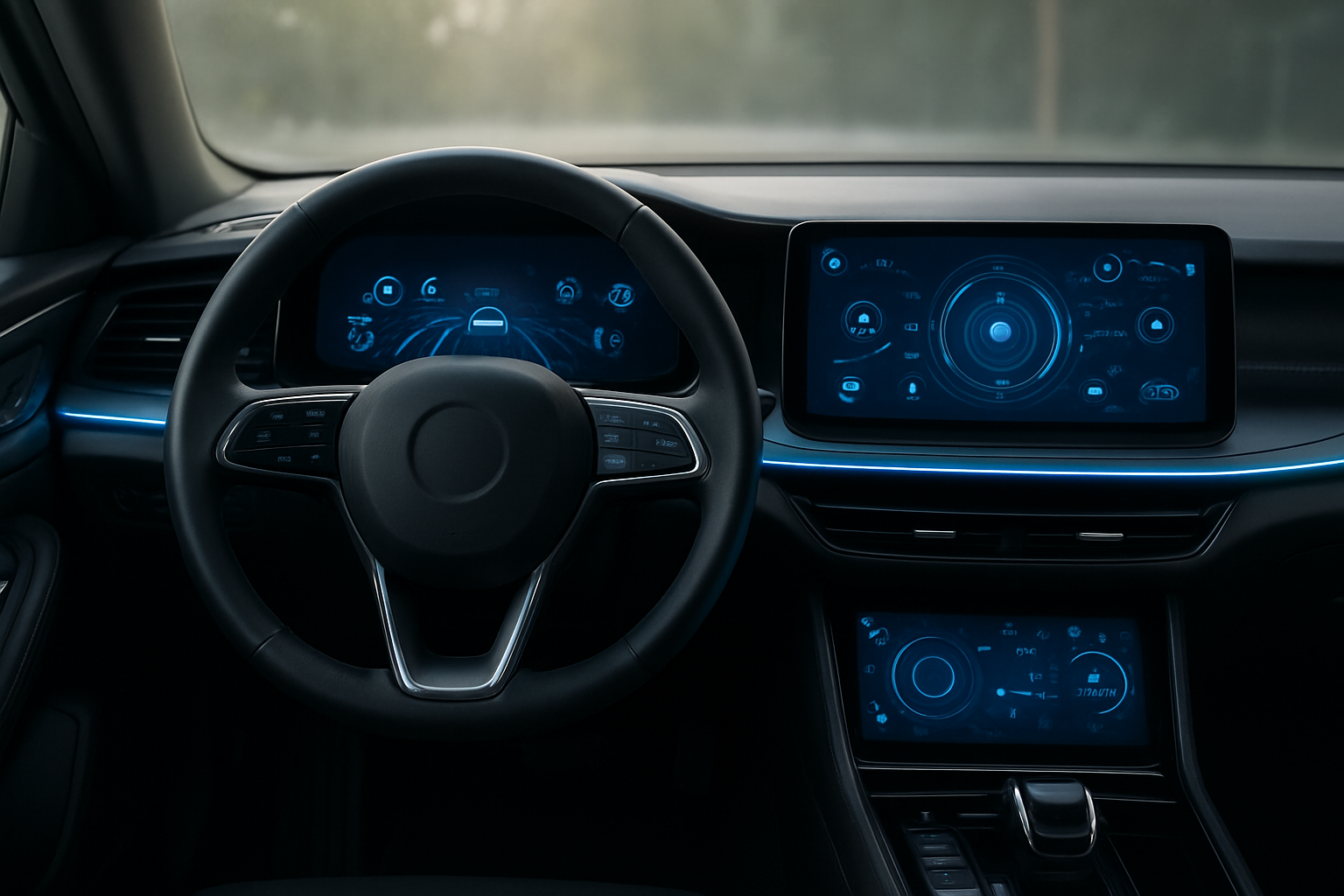
Electric vehicles typically lead the pack when it comes to advanced driver assistance systems (ADAS). Most new EVs come standard with comprehensive safety suites including adaptive cruise control, lane keeping assistance, automatic emergency braking, and blind spot monitoring. Tesla’s Autopilot, BMW’s Driving Assistant Professional, and Mercedes-EQS’s Drive Pilot showcase the cutting-edge capabilities available in electric platforms.
Hybrid vehicles offer varying levels of ADAS depending on the manufacturer and price point. Premium hybrid models like the Toyota Prius Prime and Honda Accord Hybrid include robust safety packages, while entry-level hybrids may offer more basic features. The key difference lies in how these systems integrate with the vehicle’s powertrain – EVs can leverage instant torque delivery for more precise interventions.
When choosing between hybrid and electric cars 2025, consider which safety features matter most for your daily driving scenarios. City commuters benefit from traffic jam assist and parking automation, while highway drivers prioritize adaptive cruise control and lane centering.
Over-the-Air Software Updates and Connectivity Features
Electric vehicles dominate the connected car experience. Tesla pioneered the over-the-air (OTA) update model, regularly adding new features, improving performance, and fixing bugs without requiring dealership visits. Other EV manufacturers like Rivian, Lucid, and Ford’s Mustang Mach-E have embraced similar approaches, treating vehicles more like smartphones on wheels.
Hybrid vehicles traditionally lag in OTA capabilities, though this gap is narrowing. Many 2025 hybrid models now support basic software updates for infotainment systems, but powertrain optimization and new feature deployment remain limited compared to EVs. The hybrid electric vehicle total cost ownership benefits from reduced software maintenance needs, but you’ll miss out on continuous improvement through updates.
Connectivity features in EVs often include remote climate control, charging status monitoring, and integration with smart home systems. These capabilities prove especially valuable for pre-conditioning the cabin while plugged in, maximizing efficiency and comfort.
Charging Speed Improvements and Battery Technology Advances
Battery technology advances heavily favor pure electric vehicles in 2025. Next-generation lithium iron phosphate (LFP) and solid-state batteries promise faster charging, longer lifespans, and improved cold weather performance. Many new EVs support 350kW DC fast charging, enabling 10-80% charges in under 20 minutes.
Plug-in hybrids benefit from smaller battery improvements but can’t match EV charging speeds due to their limited battery capacity. However, this creates an interesting trade-off – while PHEVs charge slower, they eliminate range anxiety through their gasoline backup.
Charging infrastructure expansion continues accelerating, with networks like Electrify America, EVgo, and Tesla’s Supercharger network (now opening to non-Tesla vehicles) providing increasingly reliable fast-charging options. This infrastructure growth makes the electric vs hybrid technology decision more compelling for EVs.
Autonomous Driving Readiness and Smart Integration Capabilities
Electric vehicles position themselves as the natural platform for autonomous driving development. Their sophisticated electrical architecture, instant response capabilities, and integrated sensor packages create ideal foundations for self-driving technology. Companies like Waymo, Cruise, and Tesla continue advancing autonomous capabilities primarily through electric platforms.
Hybrid vehicles face architectural challenges for full autonomy. The complexity of managing both electric and combustion systems while processing autonomous driving data creates technical hurdles that pure EVs avoid. Most autonomous vehicle prototypes and commercial deployments use electric powertrains for this reason.
Smart integration capabilities extend beyond autonomous driving. EVs excel at vehicle-to-grid (V2G) technology, potentially allowing your car to power your home during outages or sell electricity back to the grid during peak demand periods. This bidirectional charging capability represents a significant advantage in the best hybrid electric vehicles 2025 comparison, as traditional hybrids cannot match this functionality.
The choice between hybrid or electric car decision increasingly depends on how much you value cutting-edge technology integration and future capability expansion versus the immediate practical benefits of dual powertrain flexibility.
Making the Final Decision Based on Your Priorities

Weighing convenience versus environmental impact
The choice between hybrid vs electric cars 2025 often comes down to balancing your daily comfort with your environmental goals. Hybrids offer the safety net of gas backup, meaning you’ll never worry about finding a charging station on a long road trip or during your busy weekday schedule. You can fill up at any gas station in under five minutes and keep rolling.
Electric vehicles demand more planning but deliver maximum environmental benefits. You’ll need to map out charging stops for longer trips and ensure your home charging setup meets your needs. If you’re someone who forgets to charge their phone overnight, an EV might test your patience initially.
Consider your carbon footprint priorities. EVs produce zero direct emissions and increasingly run on clean grid electricity. Hybrids still burn gasoline, though much more efficiently than traditional cars. Your local electricity source matters too – if your area relies heavily on coal power, a hybrid might temporarily have a smaller environmental footprint.
Your daily routine plays a huge role here. Short commutes and predictable schedules favor electric vehicles. Frequent long-distance travel, unpredictable schedules, or limited charging access at home or work tips the scale toward hybrids.
Matching vehicle choice to your risk tolerance and budget
Hybrid electric car buying guide wisdom suggests matching your vehicle choice to both your financial comfort zone and your tolerance for new technology. Risk-averse buyers often gravitate toward hybrids because they represent a middle ground – you get improved fuel efficiency without completely abandoning familiar refueling habits.
Electric vehicles require a higher upfront investment but offer potentially greater long-term savings. Your risk tolerance around technology adoption matters significantly. Early EV adopters enjoy cutting-edge features and the satisfaction of driving the latest tech, but they also face potential software glitches, charging network growing pains, and faster depreciation as newer models arrive.
Budget flexibility influences your decision timeline too. Can you handle the higher monthly payments of a premium EV, or does a more affordable hybrid better match your current financial situation? Factor in your home’s electrical capacity – installing a Level 2 charger might require electrical panel upgrades costing $1,000-$3,000.
| Risk Profile | Best Choice | Key Considerations |
|---|---|---|
| Conservative | Hybrid | Proven technology, gas backup |
| Moderate | Plug-in Hybrid | Electric range with gas security |
| Aggressive | Full Electric | Maximum technology, highest potential savings |
Your credit situation affects financing options differently for hybrids versus EVs, with electric vehicles often qualifying for additional manufacturer incentives and lower interest rates.
Timeline considerations for optimal purchase timing
Best hybrid electric vehicles 2025 arrive at different points throughout the year, making timing crucial for getting the model and features you want. Electric vehicle launches typically happen in spring and fall, while hybrid refreshes often coincide with traditional auto show seasons.
Federal tax credits create timing pressure for EV purchases. The $7,500 credit applies at purchase starting in 2024, but manufacturer caps and income limits affect eligibility. Some automakers will hit their credit limits mid-year, making early purchases more valuable. Hybrid buyers face different incentive structures, often state-based rather than federal.
Lease-end timing affects your decision if you’re currently in a vehicle lease. EVs lease well due to high residual values and manufacturer support, but hybrid lease deals often provide lower monthly payments. Coordinate your purchase timing with lease maturity to avoid gap periods or unnecessary overlap.
Technology refresh cycles matter for electric vs hybrid cost comparison calculations. New EV models with improved range and faster charging arrive frequently, potentially making 2024 models less appealing by late 2025. Hybrid technology evolves more slowly, making model-year timing less critical.
Seasonal factors influence both purchase experience and hybrid or electric car decision outcomes. Winter testing helps EV buyers understand real-world range impacts, while summer driving reveals air conditioning effects on efficiency. Spring purchases often provide the widest selection and best incentives.
Personal life changes should drive your timeline too. Job changes, family additions, or housing moves all affect which technology better serves your needs.
Both hybrid and electric vehicles offer compelling advantages, but the right choice depends entirely on your personal situation. If you drive long distances regularly or live somewhere with limited charging infrastructure, a hybrid gives you flexibility without range anxiety. Electric vehicles work best for people with predictable daily routes and access to home or workplace charging.
Money matters, and both options can save you cash over time through lower fuel costs and maintenance needs. Electric cars often come with bigger upfront costs but may offer more savings long-term, especially with tax incentives. Think about your budget, how long you plan to keep the car, and what charging setup you can realistically manage. The technology in both is advancing rapidly, so consider which features matter most to you and how they align with your environmental goals. Take test drives, crunch the numbers for your specific situation, and choose the option that fits your lifestyle best rather than following trends.