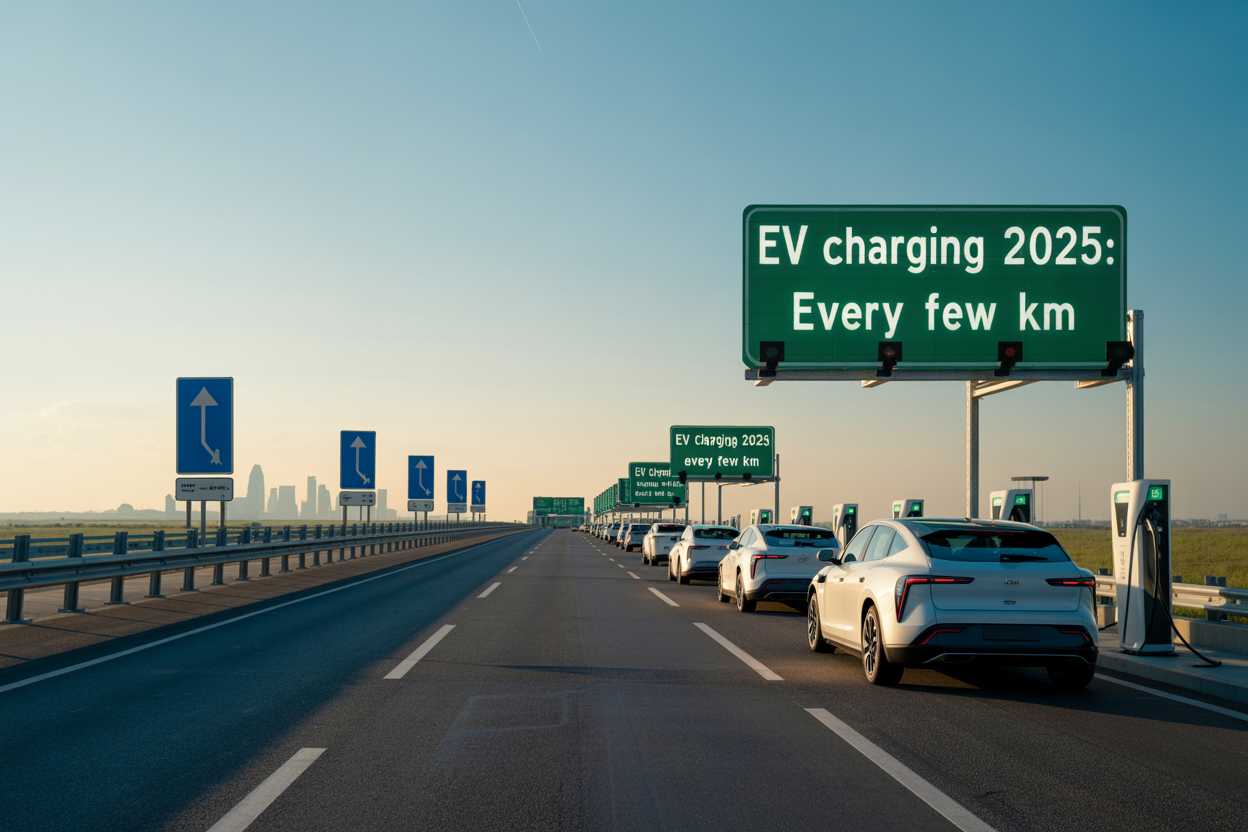
EV charging infrastructure policy 2025 brings dramatic changes to how Americans will charge their electric vehicles. Government EV charging targets now require fast charging stations every 50 miles on highways and dense networks in cities, fundamentally reshaping long-distance travel and daily driving for EV owners and anyone considering the switch from gas-powered vehicles.
The $7.5 billion federal investment through the National Electric Vehicle Infrastructure (NEVI) Program is building a backbone of 150 kW+ fast chargers along designated highway corridors. Meanwhile, cities are racing to install charging points within walking distance of most residents. This expansion directly tackles the biggest barriers to EV adoption: range anxiety and charging accessibility.
We’ll explore the specific highway charging station density requirements that put fast chargers within 50 miles of each other on major routes, plus the urban EV charging network goals that aim to blanket cities with accessible charging options. You’ll also discover how these infrastructure improvements are already changing EV long distance travel planning, making cross-country electric road trips as simple as planning gas station stops used to be.
Government Targets and Policy Frameworks Driving EV Charging Expansion

US National Electric Vehicle Infrastructure Program Requirements and $7.5 Billion Investment
The United States has positioned itself at the forefront of EV charging infrastructure development through substantial federal investment and comprehensive policy frameworks. The U.S. federal government has committed $7.5 billion to charging infrastructure expansion, with the centerpiece being the National Electric Vehicle Infrastructure (NEVI) Program. This ambitious initiative, established under the Bipartisan Infrastructure Law of 2021, allocated $5 billion specifically for fast chargers along designated transportation corridors.
The NEVI Program sets stringent technical and placement requirements for government-funded charging infrastructure. Under these regulations, fast charging stations along Alternative Fuel Corridors (AFCs) must feature at least four DC fast chargers, each delivering a minimum of 150 kW. These stations must be strategically positioned within one mile of highways and spaced at maximum intervals of 50 miles to ensure consistent coverage for long-distance EV travel.
Despite the significant funding allocation, implementation has faced challenges, with only approximately $30 million spent by the end of 2024. The deployment timeline became further uncertain in January 2025 when Executive Order 14154 paused the disbursement of NEVI funds pending a comprehensive review, creating questions about future allocation schedules and program continuity.
European Union Alternative Fuels Infrastructure Regulation Mandating 150kW Stations Every 60km
The European Union has established one of the world’s most comprehensive regulatory frameworks for EV charging infrastructure through its Alternative Fuels Infrastructure Regulation (AFIR). This landmark legislation mandates the installation of fast-charging stations with minimum 150 kW capacity every 60 kilometers along the Trans-European Transport Network (TEN-T) core road network by 2025.
AFIR requirements go beyond basic coverage density, establishing robust power output standards to support the growing EV market. Each mandated station must provide a minimum total power output of 400 kW, ensuring multiple vehicles can charge simultaneously without significant power reduction. These requirements will become even more stringent by the end of 2027, when the minimum total power output increases to 600 kW per station.
This regulatory approach creates a standardized, reliable charging network across EU member states, addressing range anxiety concerns for cross-border travel and establishing Europe as a leader in EV charging infrastructure policy development.
Regional Policy Initiatives in India, China, and Other Global Markets
Global markets are implementing diverse approaches to EV charging infrastructure expansion, with several countries establishing ambitious deployment targets. China leads worldwide charging infrastructure development, accounting for approximately two-thirds of global public charger growth since 2020 and currently holding 65% of global charging points.
Chinese regional governments are setting aggressive expansion goals, with Beijing aiming to construct 1,000 ultra-fast charging stations by the end of 2025, while Chongqing plans to deploy 4,000 additional stations. Private sector partnerships are accelerating these efforts, as XPeng and Volkswagen have committed to rolling out 20,000 ultra-fast chargers across more than 400 Chinese cities.
India’s charging infrastructure development gained significant momentum in 2024, with 40,000 new public chargers installed throughout the year. The government allocated INR 20 billion ($240 million) through the PM E-DRIVE scheme in October 2024, focusing on urban centers and major transport corridors. This initiative targets the installation of 22,100 EV chargers for four-wheeled vehicles by March 2026. Additionally, three major government-owned oil marketing companies constructed nearly 8,000 fast-charging points during 2023-2024 under the FAME Phase II scheme.
Other significant regional initiatives include Korea’s expansion from 34,000 to 47,000 fast chargers in 2024, with plans for 4,400 additional units in 2025 supported by a KRW 620 billion ($425 million) budget. Japan has set an ambitious target of 300,000 public charging points by 2030, representing a nine-fold increase from 2024 levels. Smaller markets are also establishing substantial growth targets, with New Zealand aiming for 10,000 charge points by 2030, Indonesia targeting 30,000 charging stations, and Thailand planning 12,000 stations by the same timeframe.
Highway Charging Infrastructure Standards and Coverage Goals
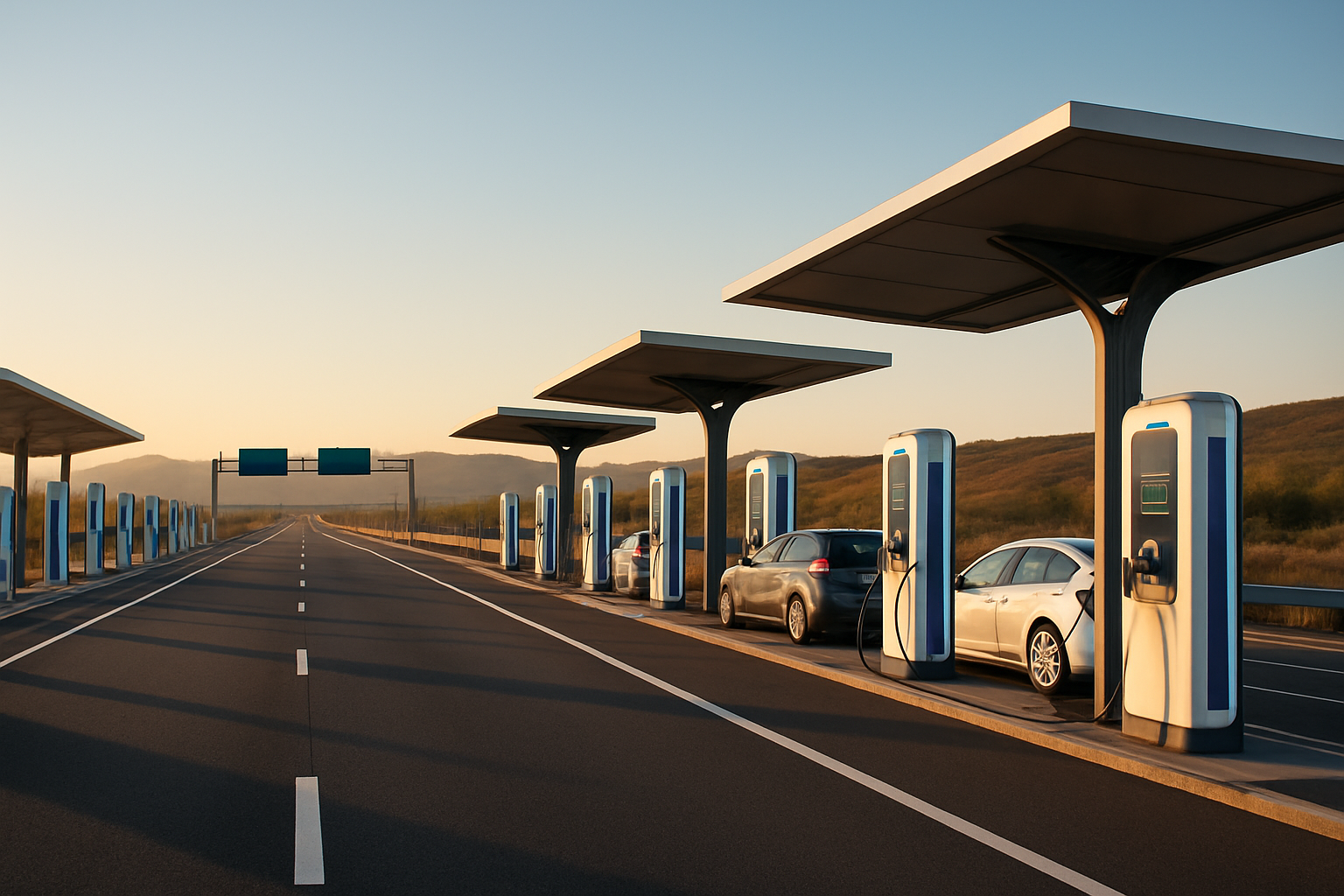
US NEVI Program’s 50-Mile Spacing Requirements Along Alternative Fuel Corridors
The National Electric Vehicle Infrastructure (NEVI) program represents a cornerstone of America’s EV charging infrastructure 2025 strategy, establishing comprehensive coverage standards for highway charging station density. The program’s primary objective centers on placing fast chargers every 50 miles along Alternative Fuel Corridors (AFCs), effectively eliminating the charging gaps that have historically hindered long-distance electric vehicle travel.
NEVI’s stringent requirements mandate that each charging station along AFCs must feature at least four DC fast chargers, with each unit delivering a minimum of 150 kW power output. These stations must be strategically positioned within one mile of the highway to ensure convenient access for travelers. This standardized approach to fast charging infrastructure expansion directly addresses range anxiety solutions by providing predictable charging availability.
Upon achieving full NEVI compliance across all Alternative Fuel Corridors, the program projects that fast charger coverage will reach an impressive 94% of U.S. counties. Additionally, 75% of roads will become consecutively accessible within 500 miles from each county, creating an interconnected network that supports seamless EV long distance travel planning.
Current implementation reveals significant regional disparities in coverage. As of late 2024, only 35% of the U.S. interstate highway system had achieved the target spacing of chargers at most 50 kilometers apart. The Pacific region leads with 70% highway coverage meeting these standards, while central regions lag between 20-30% coverage, highlighting the urgent need for accelerated infrastructure development.
European Highway Coverage Achieving 75% Network Accessibility Every 50km
Europe’s Alternative Fuels Infrastructure Regulation (AFIR) has established ambitious targets for government EV charging targets, mandating the installation of 150 kW fast-charging stations every 60 kilometers along the Trans-European Transport Network (TEN-T) core road network by 2025. This regulatory framework has driven remarkable progress in creating a comprehensive electric vehicle charging network 2025.
By the end of 2024, European achievements in highway charging infrastructure have surpassed expectations, with over 75% of the European highway network featuring chargers spaced at most 50 kilometers apart. This extensive coverage demonstrates Europe’s leadership in addressing electric vehicle charging policy implementation.
Several European nations have achieved exceptional coverage rates, with the Netherlands, Belgium, Norway, Germany, and France all surpassing 90% highway network coverage with charging points every 50 kilometers. These leading countries serve as models for comprehensive urban EV charging network integration that extends beyond city limits to create seamless travel corridors.
The European approach extends beyond basic coverage requirements by incorporating fast chargers ranging from 22-150 kW, which adds an additional 25% of road coverage with fast charging capabilities at least every 50 kilometers. This tiered approach ensures that drivers have access to appropriate charging speeds based on their travel needs and vehicle capabilities.
Fast Charging Capacity Requirements and Power Output Standards
The technical specifications governing fast charging infrastructure expansion reflect the growing demands of modern electric vehicles and the need for reduced charging times. Both American and European regulations have established minimum power output standards that ensure compatibility with current and future EV technologies.
Under the NEVI program, all fast chargers must deliver a minimum of 150 kW per unit, establishing a baseline for charging speed that can significantly reduce wait times during long-distance travel. This standardization ensures that drivers can expect consistent charging performance regardless of their location along Alternative Fuel Corridors.
European AFIR requirements mirror these specifications, mandating fast-charging stations of at least 150 kW capacity. However, the EU regulation goes further by requiring each station to offer a minimum total power output of 400 kW, with plans to increase this requirement to 600 kW by the end of 2027. This escalating power requirement anticipates the growing number of vehicles requiring simultaneous charging and the increasing power demands of next-generation EVs.
The evolution toward ultra-fast charging is already evident in European markets, where approximately 20% of ultra-fast chargers deliver 350 kW and above. This high-power segment experienced nearly 100% growth in 2024 compared to 2023, indicating rapid adoption of cutting-edge charging technology that will further reduce range anxiety and improve the overall EV driving experience.
Urban and City Charging Density Targets for Mass EV Adoption
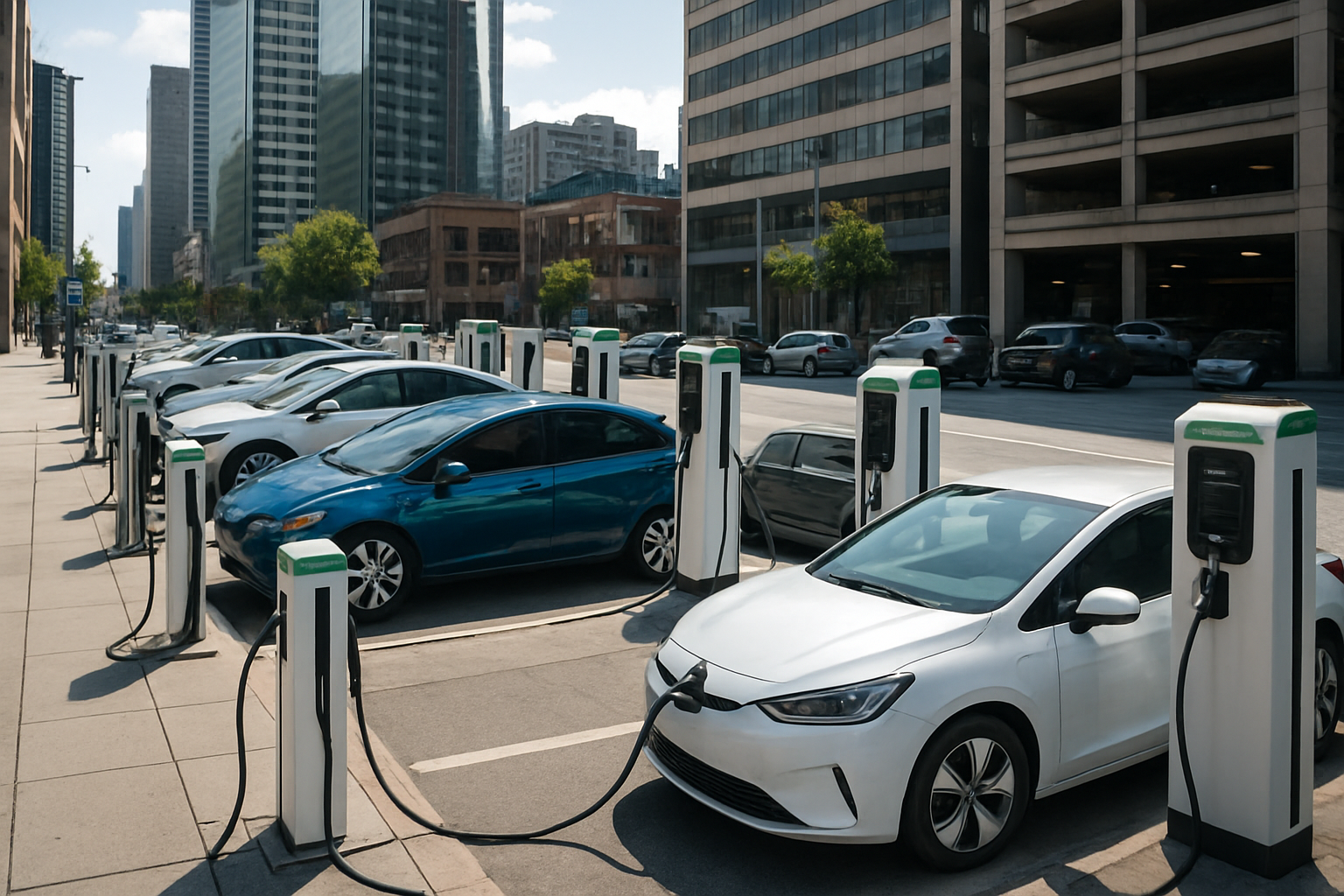
Dense Urban Coverage Goals with 70% of EU Population Within 1km of Charging Points
The urban EV charging network 2025 landscape reveals a significant disparity between regions in achieving comprehensive coverage targets. In the European Union, the ambitious goal of ensuring 70% of the population lives within 1 kilometer of a charging point has already been achieved, demonstrating the effectiveness of coordinated government EV charging targets across member states. This milestone represents a crucial foundation for mass EV adoption in densely populated areas.
Over two-thirds of chargers in both Europe and the United States are strategically positioned in urban areas, recognizing that cities serve as the primary battlegrounds for electric vehicle infrastructure expansion. However, the United States faces a more challenging landscape, with less than half of the population currently living within 1 kilometer of a charging station. This gap highlights the varying speeds of EV charging infrastructure 2025 deployment and the need for accelerated investment in American metropolitan areas.
Metropolitan Area Fast Charger Deployment Strategies for High-Traffic Zones
Fast charging infrastructure expansion in metropolitan areas requires sophisticated deployment strategies tailored to high-traffic zones and diverse user needs. Current fast charger coverage exceeds 75% in leading U.S. metropolitan areas, particularly in California and Nevada, showcasing successful regional implementation of government EV charging targets.
The power capacity distribution between regions reveals interesting strategic differences. Only 15% of urban public chargers in Europe are rated over 22 kW, while this share nearly doubles to 30% in the United States. This disparity suggests different approaches to addressing range anxiety solutions, with American cities prioritizing higher-power charging capabilities.
Dutch cities exemplify best practices in urban charging density, demonstrating greater emphasis on faster and denser charger installations compared to non-urban areas. Major European cities typically maintain higher charger-to-EV ratios than surrounding regions, ensuring adequate infrastructure keeps pace with adoption rates.
Urban charging networks must accommodate diverse user profiles beyond private vehicle owners. Public chargers in cities serve taxis, delivery vehicles, and visitors requiring daytime charging capabilities. Chinese cities are leading ultra-fast charging deployment, with Beijing targeting 1,000 stations by end-2025 and Chongqing planning 4,000 additional ultra-fast chargers by the same timeframe.
Addressing Home Charging Limitations in Dense Urban Environments
Dense urban environments present unique challenges that require expanded public charging infrastructure to support mass EV adoption. Many urban residents lack access to home charging solutions, creating dependency on public charging networks for daily vehicle operation.
Housing architecture significantly influences charging infrastructure needs. In Germany, where over 60% of the population lives in apartments, public charging demand differs markedly from England and Wales, where under 25% reside in apartment complexes. These demographic patterns directly impact government EV charging targets and infrastructure planning strategies.
China’s densely populated cities illustrate this challenge, where many drivers rely predominantly on public charging points due to limited home charging access. This contrasts with European markets where higher home charging accessibility reduces pressure on public networks. The Chinese model demonstrates how urban EV charging networks can successfully support mass adoption when properly scaled and strategically distributed throughout metropolitan areas.
Technology Advances Enabling Faster Charging and Reduced Wait Times
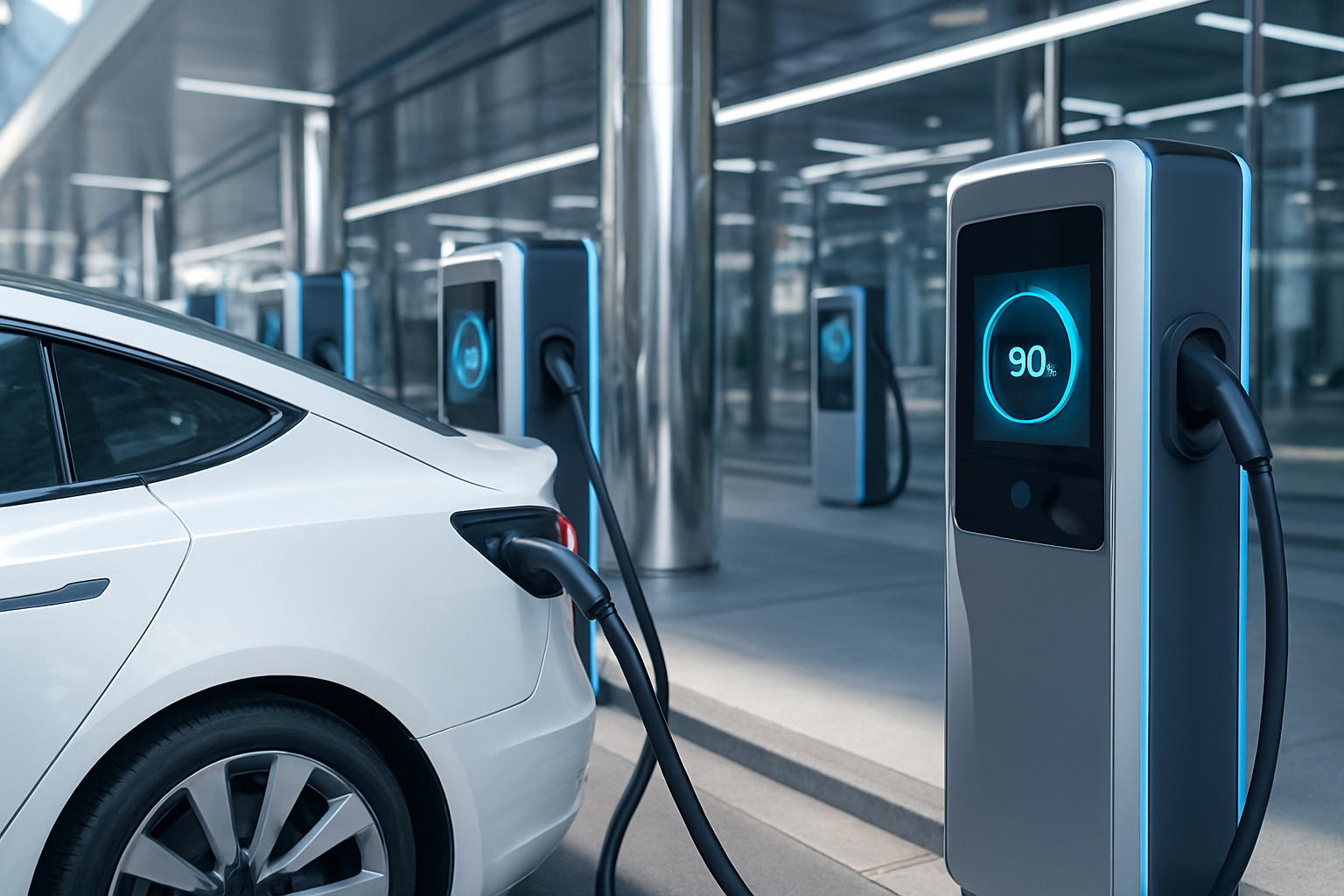
Ultra-Fast Charging Evolution from 150kW to Megawatt Capacity Systems
The EV charging infrastructure 2025 landscape is witnessing an unprecedented transformation in charging capabilities. Ultra-fast chargers operating at 150 kW or above experienced remarkable growth, increasing by over 50% in 2024 while simultaneously becoming more affordable with prices decreasing by 20% between 2022 and 2024. This technological leap now represents nearly 10% of all fast charging infrastructure expansion globally.
The European Union leads this charging revolution, with ultra-fast charging points surging by 60% in 2024 to reach over 77,000 chargers across the region. Particularly impressive is the premium tier segment, where approximately 20% of EU ultra-fast chargers now deliver 350 kW and above, with this high-capacity segment nearly doubling throughout 2024.
The most groundbreaking development involves megawatt charging technology, previously exclusive to heavy-duty vehicles but now accessible for passenger cars. This advancement stems from significant improvements in battery technology and charging platform engineering, with pioneering models already operational in China’s electric vehicle charging network 2025 deployment.
Battery Technology Breakthroughs Allowing 400km Range in 5-Minute Charging
Revolutionary battery innovations are fundamentally reshaping range anxiety solutions through unprecedented charging speeds. Manufacturers have overcome traditional safety limitations by redesigning anode structures to dramatically accelerate lithium uptake during fast charging infrastructure expansion cycles.
CATL’s technological progression exemplifies this breakthrough timeline. Their 2023 Shenxing battery launch delivered 200 km of additional range from just a 5-minute charge at 30% battery capacity. By 2024, CATL enhanced this performance to exceed 40% battery capacity restoration in 5 minutes, translating to 300 km additional range through increased energy density optimization.
Comparative analysis reveals Tesla’s Supercharger network currently provides approximately 100 km of additional range in 5 minutes. However, BYD’s March 2025 Super-e platform announcement claimed revolutionary 400 km range restoration in just 5 minutes, enabled through silicon carbide power chips, advanced liquid-cooling systems, and sophisticated 1,000 V architecture compatible with megawatt charging capabilities.
CATL continued this innovation trajectory with their second-generation Shenxing battery announcement in April 2025, promising even higher charging speeds for long distance travel planning applications.
Grid Infrastructure Requirements and Energy Storage Integration Solutions
Deploying ultra-high-power megawatt charging infrastructure presents significant grid infrastructure challenges that require strategic solutions. These government EV charging targets demand substantial electrical grid upgrades, potentially creating deployment bottlenecks and increased implementation costs across highway charging station density projects.
The solution lies in intelligent energy storage integration. Pairing megawatt chargers with battery storage systems effectively alleviates peak demand pressures while optimizing grid utilization patterns, thereby accelerating urban EV charging network rollout timelines. This approach enables more efficient load management during high-demand periods.
BYD demonstrates this integrated approach through their ambitious deployment plan for 4,000 megawatt chargers supported by comprehensive battery storage systems throughout China. This strategic combination addresses both infrastructure scalability and grid stability concerns.
China’s government further supports this technological integration through standardized vehicle-to-grid (V2G) technology policies, anticipating EVs will contribute 10 GW of flexible grid capacity by 2030. This bidirectional charging capability transforms electric vehicles from grid consumers into active grid participants, supporting overall charging station coverage goals while enhancing system resilience.
Range Anxiety Reduction Through Strategic Charging Network Placement
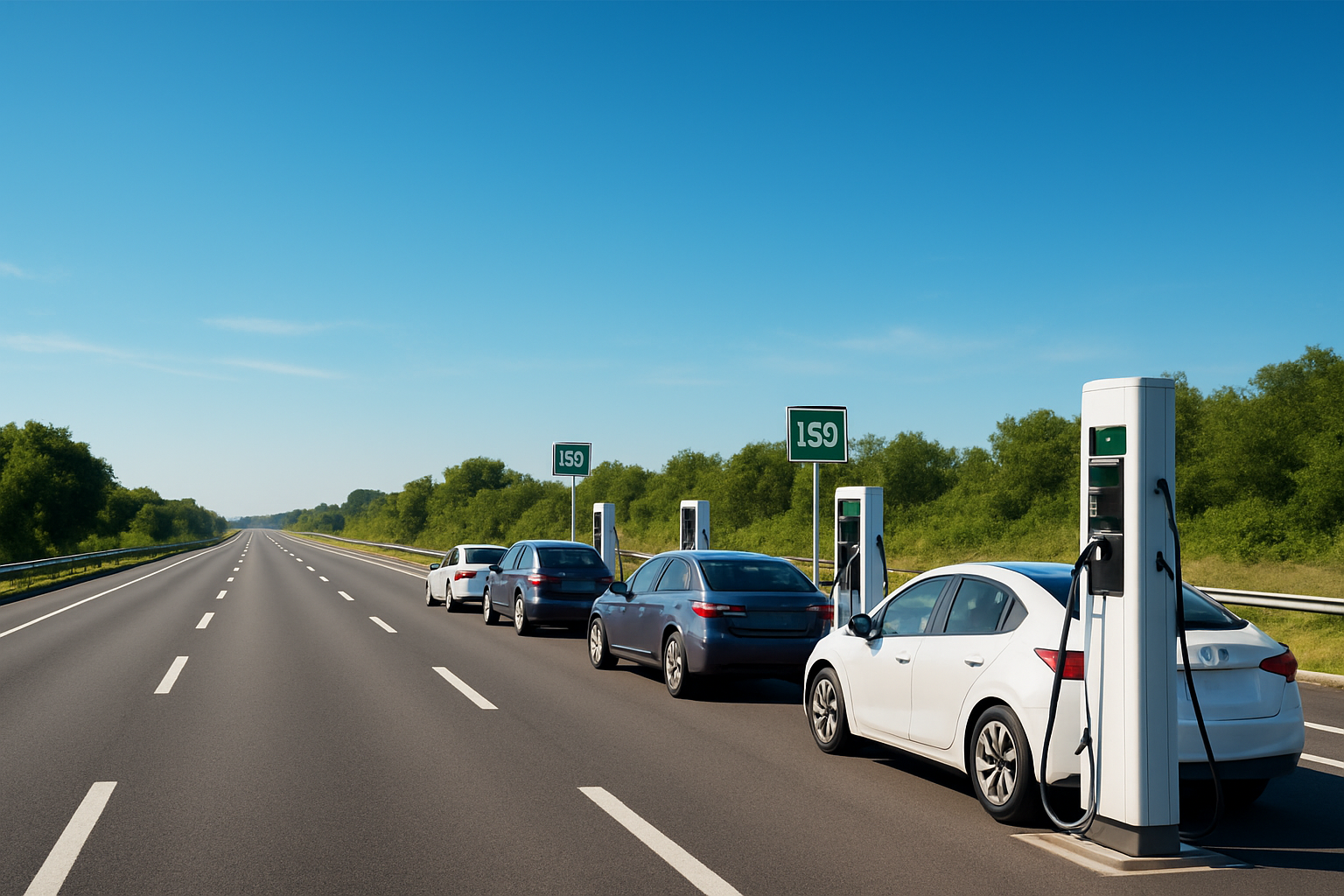
Highway Coverage Improvements Enabling 500-Mile Travel Distances
The strategic expansion of EV charging infrastructure 2025 focuses heavily on eliminating range anxiety through comprehensive highway coverage improvements. Once all U.S. Alternative Fuel Corridors (AFCs) achieve NEVI compliance, fast charger coverage is projected to reach an impressive 94% of U.S. counties. This extensive network will ensure that 75% of roads remain consecutively accessible within 500 miles from each county, fundamentally transforming long-distance EV travel capabilities.
The increased density of fast charging infrastructure expansion along major highways represents a critical breakthrough for electric vehicle adoption. With strategically placed charging stations, EVs will be capable of traveling up to 500 miles with minimal queuing delays, directly addressing one of the most significant barriers to EV ownership. This enhanced highway charging station density ensures that drivers can confidently plan extended journeys without the persistent worry of being stranded between charging points.
Urban Fast Charging Networks Supporting Daily Commuting and City Travel
Urban EV charging networks play an equally vital role in range anxiety solutions by providing widespread access to fast chargers throughout metropolitan areas. This comprehensive urban infrastructure enhances driver confidence for daily commuting and city travel, making electric vehicles a practical choice for urban dwellers and workers.
The significance of public chargers in cities extends beyond personal vehicle ownership, serving as crucial infrastructure for commercial applications including taxis, delivery vehicles, and visiting drivers who cannot rely on overnight home charging solutions. These urban fast charging networks create a reliable safety net that supports both individual EV owners and commercial fleet operators, fostering broader adoption across diverse transportation sectors.
Backup Charging Options for Emergency Situations and Route Flexibility
A denser charging network instills unprecedented confidence in EV adoption by making charging as convenient as conventional refueling experiences. This improved network infrastructure allows for significantly more flexibility when planning routes around charging stops, effectively eliminating the rigid planning constraints that previously characterized electric vehicle travel.
The enhanced charging infrastructure particularly addresses worst-case scenarios that have historically contributed to range anxiety. Whether facing unexpected detours, traffic delays, or extreme weather conditions, drivers can now rely on multiple backup charging options within reasonable distances. This redundancy in the electric car charging network 2025 creates a robust safety net that mirrors the convenience and reliability that drivers expect from traditional fuel infrastructure, ultimately making EV long distance travel planning as straightforward and flexible as conventional vehicle journey planning.
Long-Distance Travel Planning Benefits from Enhanced Infrastructure
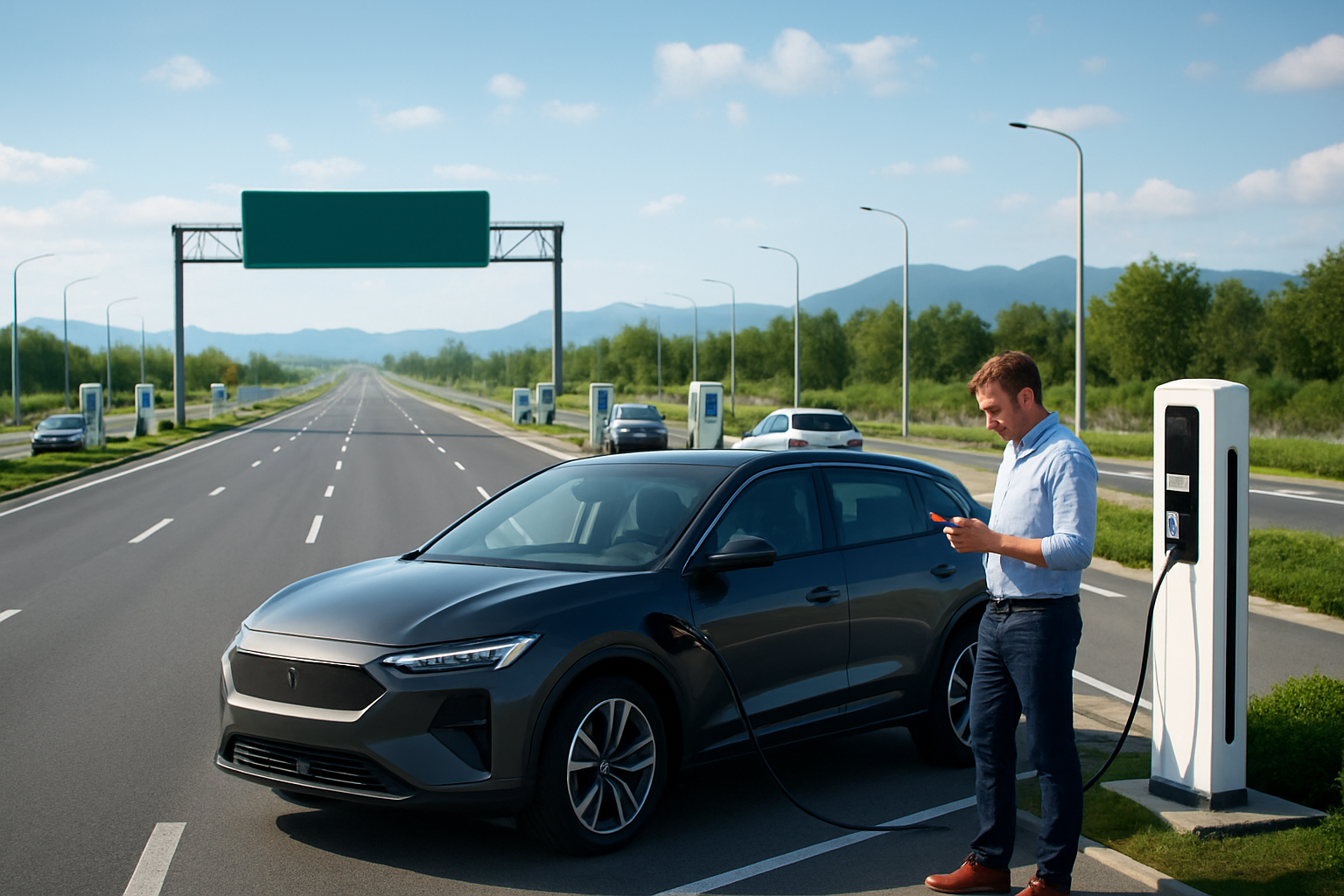
Predictable Charging Stop Intervals Every 50-60km on Major Routes
The implementation of standardized charging intervals represents a fundamental shift in EV long distance travel planning. The NEVI program’s strategic approach of placing fast chargers every 50 miles along Alternative Fuel Corridors (AFCs) creates a predictable framework that eliminates guesswork from long-distance EV journeys. This systematic placement ensures travelers never face unexpectedly large gaps between charging opportunities, fundamentally transforming how drivers approach cross-country travel.
In Europe, the Alternative Fuels Infrastructure Regulation (AFIR) takes this concept even further by mandating 150 kW fast-charging stations every 60 km along the TEN-T core road network by 2025. This regulatory framework demonstrates the government’s commitment to creating seamless highway charging infrastructure expansion that matches the reliability drivers expect from traditional fuel stations.
The progress is already evident, with over 75% of the European highway network achieving charger spacing of at most 50 km apart by the end of 2024. This achievement provides a blueprint for other regions pursuing similar EV charging infrastructure 2025 goals and demonstrates the feasibility of dense highway charging station density.
Reduced Charging Time Matching Traditional Fuel Stop Durations
The convergence of charging times with traditional refueling durations marks a critical milestone for EV adoption. Advanced battery technology has enabled reliable fast charger networks to recharge vehicles in 15-20 minutes, a timeframe that aligns perfectly with conventional highway rest stops and proves sufficient for most consumers embarking on long-distance travel.
Ultra-fast charging capabilities of 150 kW and above have transformed the charging experience, allowing drivers to add approximately 150 km of driving range in just 15 minutes. This performance creates a direct comparison with conventional highway pit stops, where travelers typically spend similar amounts of time for bathroom breaks, food purchases, and brief rest periods.
The psychological impact of this time parity cannot be understated. When EV charging times match familiar refueling patterns, the transition feels natural rather than disruptive, significantly reducing barriers to electric vehicle adoption for long-distance travelers.
Route Planning Confidence with Reliable High-Speed Charging Access
Now that charging infrastructure has achieved greater density and reliability, EV long distance travel planning has evolved from anxiety-inducing calculations to confident journey mapping. The widespread access to fast chargers along highways fundamentally enhances confidence for extended travel while enabling better route planning strategies that were previously impossible with sparse charging networks.
This enhanced charging network makes EV charging as convenient and reassuring as conventional refueling, directly addressing range anxiety solutions that have historically hindered EV adoption. The reliability factor transforms charging from a source of stress into a predictable component of travel planning, similar to how drivers currently plan fuel stops on long journeys.
Perhaps most importantly, the denser charging infrastructure provides greater flexibility in route planning while helping mitigate concerns related to unexpected detours, traffic delays, or extreme weather conditions. This adaptability ensures that drivers can adjust their routes dynamically without fear of being stranded, creating the same level of confidence that traditional vehicle owners experience when exploring unfamiliar territories or dealing with unplanned route changes.
Market Projections and Implementation Timelines Through 2030

Global Public Charging Capacity Increasing Nine-Fold by 2030
The electric vehicle charging landscape is poised for unprecedented expansion as we move toward 2030, with global public charging capacity projected to undergo a massive transformation. This dramatic scaling represents one of the most significant infrastructure buildouts in modern transportation history, fundamentally reshaping how we approach EV charging infrastructure 2025 and beyond.
The nine-fold increase in charging capacity reflects the convergence of government EV charging targets, private sector investment, and technological advancement working in unison. This exponential growth will directly address current limitations in highway charging station density and urban EV charging network coverage, providing the foundation for widespread electric vehicle adoption.
Now that we understand the scale of expansion required, the implementation strategy becomes crucial for meeting these ambitious capacity targets while ensuring strategic placement for maximum effectiveness.
Regional Deployment Schedules and Annual Installation Targets
With the global framework established, regional markets are developing distinct deployment schedules tailored to their specific infrastructure needs and policy priorities. The fast charging infrastructure expansion varies significantly across different regions, reflecting local market conditions and governmental support mechanisms.
Regional implementation strategies focus on creating comprehensive networks that support both daily commuting needs and long-distance travel planning. These deployment schedules prioritize high-traffic corridors and urban centers to maximize utilization rates while building consumer confidence in electric vehicle reliability.
The annual installation targets established by various regions demonstrate a coordinated approach to infrastructure development, ensuring that charging station coverage goals align with projected EV adoption rates and range anxiety solutions.
Investment Requirements and Funding Mechanisms for Infrastructure Buildout
Previously, we’ve seen how capacity targets and deployment schedules create the framework for expansion. The financial mechanisms driving this transformation reveal the scale of commitment required to achieve these electric car charging network 2025 objectives.
France’s “Charge France,” established in 2025 as a charge point operator association, exemplifies the substantial financial commitments being made across Europe. The organization has committed EUR 4 billion specifically to expand the national stock of ultra-fast charging points to 40,000 units by 2028. This represents one of the most significant single-country investments in charging infrastructure to date.
Meanwhile, China’s approach demonstrates the integration of charging infrastructure with energy storage solutions. BYD’s plans to deploy 4,000 megawatt chargers supported by battery storage systems across China illustrates how funding mechanisms are evolving to include comprehensive energy ecosystem development rather than standalone charging solutions.
These investment models highlight the diverse funding approaches emerging globally, from public-private partnerships to specialized industry consortiums, all working toward the common goal of eliminating range anxiety through strategic charging network placement.
The ambitious 2025 EV charging infrastructure policies represent a transformative shift toward mass electric vehicle adoption. With the U.S. NEVI program targeting fast chargers every 50 miles along highways and Europe’s AFIR mandating stations every 60 km, these strategic initiatives will create comprehensive charging networks that address the primary barriers to EV ownership. The combination of dense urban coverage and reliable highway infrastructure means that range anxiety will become increasingly obsolete, while long-distance travel planning becomes as straightforward as with conventional vehicles.
The technological advances enabling megawatt charging speeds—capable of adding 400 km of range in just 5 minutes—coupled with the projected ninefold increase in public charging capacity by 2030, signal a future where electric vehicles will offer superior convenience to traditional cars. As governments worldwide invest billions in charging infrastructure and implement standardized coverage requirements, the foundation is being laid for a seamless transition to electric mobility. For consumers, fleet operators, and businesses, now is the time to prepare for this electric future by understanding these policy frameworks and incorporating the expanding charging network into their transportation strategies.