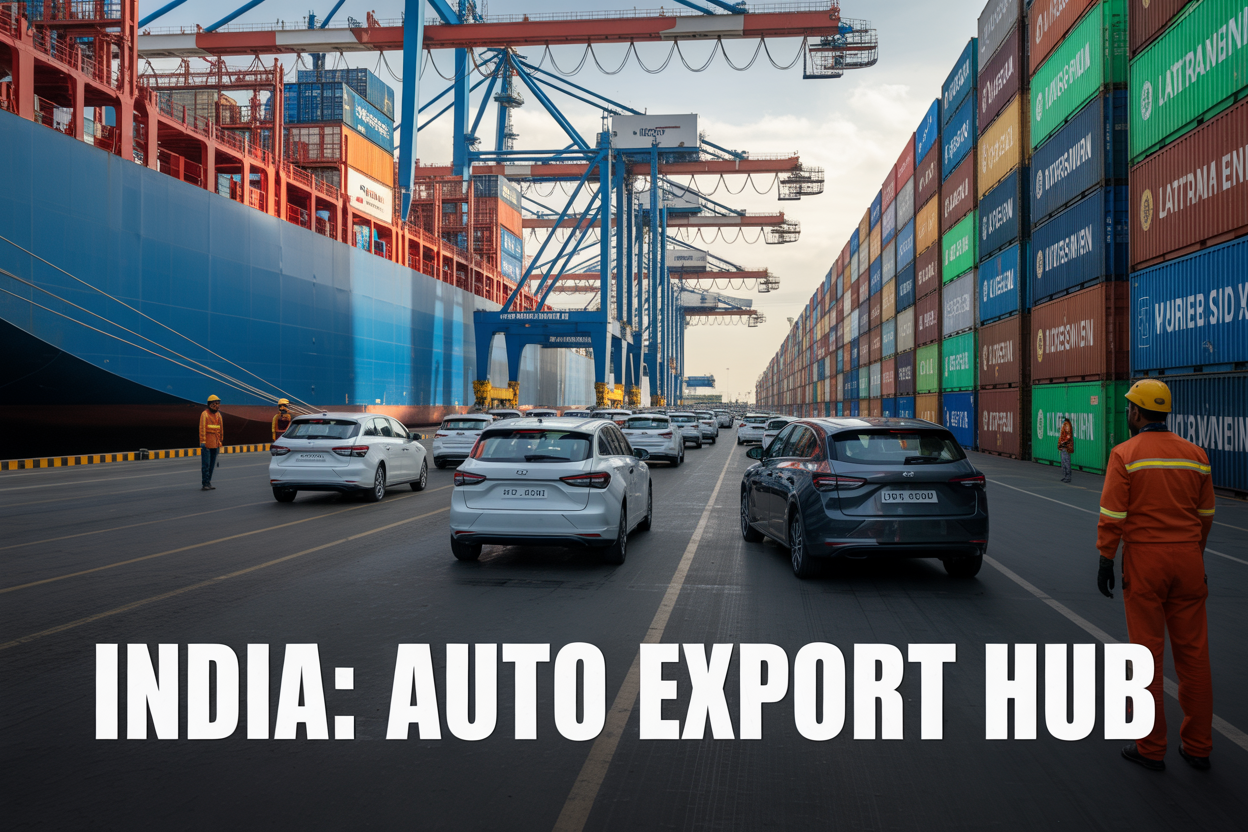
India auto export hub -India’s automotive sector is shifting into high gear as the country becomes a major export powerhouse for global car manufacturers. European markets are driving this surge, with shipments across the Atlantic hitting record numbers as companies tap into India’s competitive manufacturing advantages.
Who this is for: Business professionals, automotive industry stakeholders, investors, and trade analysts tracking global supply chain shifts and emerging market opportunities.
This analysis covers how India’s cost-effective production capabilities and skilled workforce are attracting major automakers to set up shop. We’ll explore the infrastructure investments fueling this export boom and examine the economic ripple effects reshaping India’s role in the global automotive landscape.
India’s Manufacturing Advantages Drive Automotive Export Growth
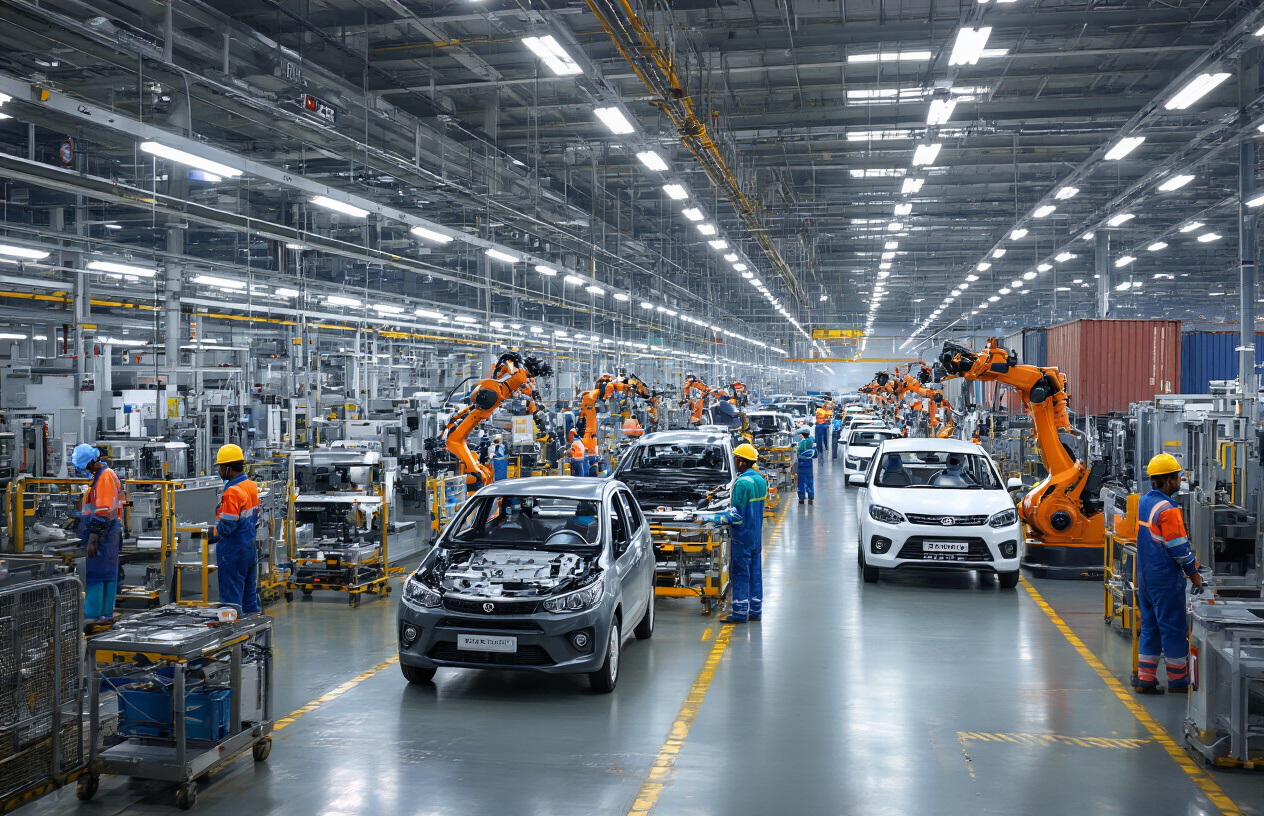
Cost-effective production capabilities and skilled workforce benefits
India has emerged as a manufacturing powerhouse in the automotive sector, offering production costs that are 15-25% lower than traditional manufacturing hubs. The country’s labor costs remain significantly competitive, with skilled technicians earning roughly $200-400 per month compared to $2,000-3,000 in European markets. This cost advantage extends beyond wages to encompass raw materials, energy, and operational expenses.
The Indian automotive workforce brings exceptional technical expertise, with over 500 engineering colleges producing 200,000 automotive engineers annually. Major training institutes like the Automotive Skills Development Council have certified over 1.2 million professionals in various automotive disciplines. This talent pool combines traditional manufacturing skills with modern automation knowledge, creating a unique blend that automakers find invaluable.
Manufacturing efficiency has reached impressive levels, with Indian plants achieving productivity rates of 20-22 vehicles per employee annually, matching international standards. The availability of component suppliers within industrial clusters reduces logistics costs by 10-15%, while shorter supply chains minimize inventory requirements and production delays.
Government incentives and favorable export policies boost competitiveness
The Production Linked Incentive (PLI) scheme has allocated ₹57,042 crore specifically for automotive manufacturing, offering 13-18% incentives on incremental sales over base years. This program has attracted 95 companies to establish or expand operations, with committed investments exceeding ₹74,000 crore.
Export promotion policies include duty drawback schemes allowing manufacturers to claim refunds of 2-4% on exported goods, while the Advance Authorization Scheme permits duty-free import of inputs for export production. Special Economic Zones (SEZs) provide additional benefits including 100% income tax exemption for the first five years and 50% exemption for the next five years.
The Merchandise Exports from India Scheme (MEIS) offers scrips worth 2-5% of FOB value for automotive exports, which companies can use to pay customs duties or sell in the open market. These policies have reduced the effective cost of exports by 8-12%, making Indian-manufactured vehicles highly competitive in global markets.
Strategic geographic location enables efficient global supply chain access
India’s position between major consumer markets provides unique logistical advantages, with shipping times to Europe averaging 18-22 days compared to 35-40 days from East Asian manufacturers. Major ports like Mundra, JNPT, and Chennai have invested heavily in automotive handling facilities, reducing port dwell times to 2-3 days from the previous 7-10 days.
The country’s proximity to key raw material sources gives automakers direct access to steel from Odisha and Karnataka, aluminum from Odisha and Andhra Pradesh, and rare earth elements from Kerala and Tamil Nadu. This geographic advantage reduces material costs by 5-8% compared to importing these inputs.
Connectivity improvements have transformed logistics efficiency. The Western Dedicated Freight Corridor reduces transit time from manufacturing hubs to ports by 30%, while the Eastern Dedicated Freight Corridor connects automotive clusters with raw material sources. These infrastructure developments have cut inland transportation costs by 15-20%, making Indian exports more price-competitive in global markets.
European Market Demand Fuels India’s Auto Export Surge
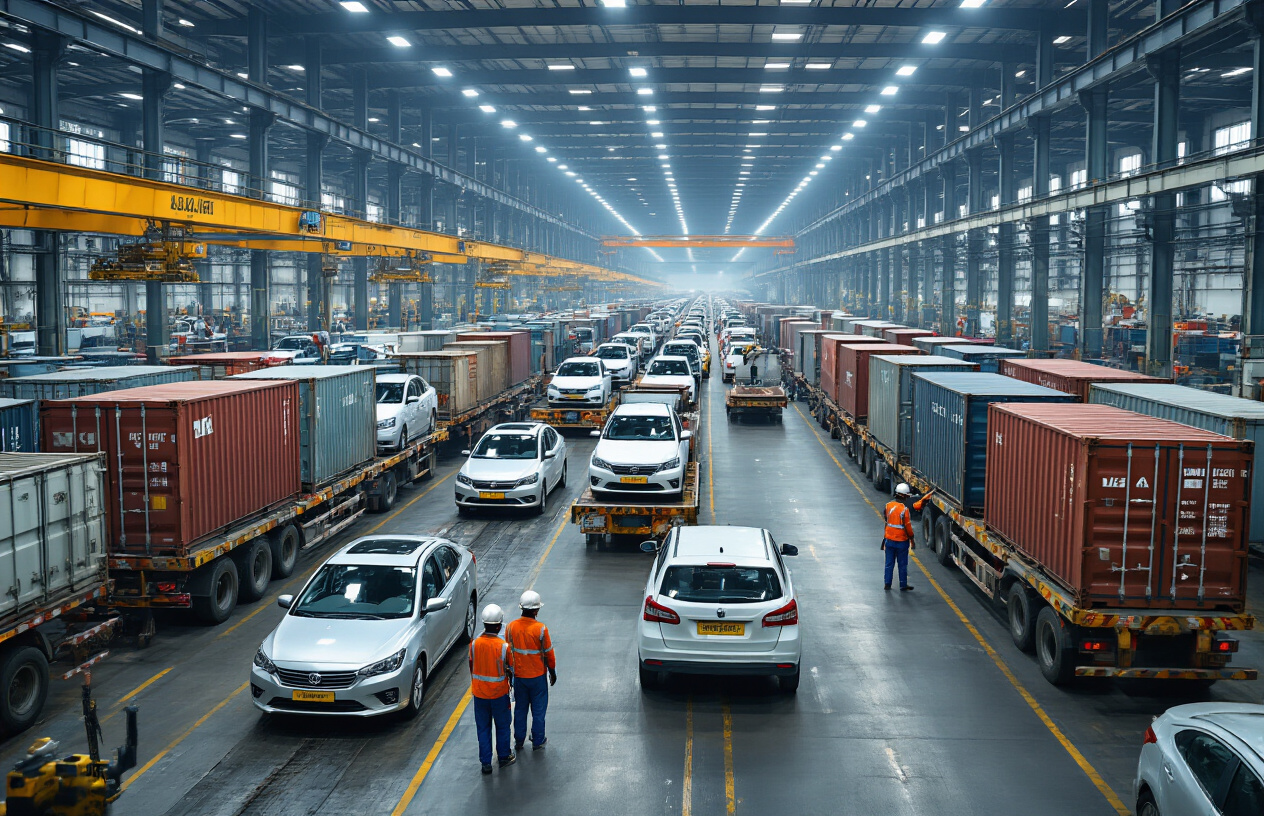
Rising European Consumer Preference for Affordable Indian-Made Vehicles
European consumers are increasingly turning to Indian-manufactured vehicles as cost pressures mount across the continent. With inflation affecting household budgets and fuel prices remaining volatile, buyers are seeking value-driven alternatives without compromising on quality. Indian automakers have responded by delivering vehicles that offer competitive pricing while meeting stringent European safety and emission standards.
The shift became particularly pronounced during the post-pandemic recovery period when European consumers reassessed their purchasing priorities. Models like the Dacia Spring, manufactured in India, gained significant traction in markets like France and Germany. European buyers discovered that Indian-made vehicles could deliver reliable performance at price points 15-20% lower than locally manufactured alternatives.
Quality improvements in Indian manufacturing have erased previous skepticism. Advanced production facilities operated by companies like Maruti Suzuki, Hyundai, and Tata Motors now produce vehicles that match global benchmarks. Customer satisfaction surveys show Indian-made vehicles performing competitively with traditional European brands, particularly in reliability and after-sales service categories.
Supply Chain Diversification Strategies by European Automakers
European automotive companies are actively reshaping their global supply chains to reduce dependency on single-region manufacturing. The semiconductor shortage and production disruptions experienced during 2020-2022 highlighted vulnerabilities in concentrated supply networks. India has emerged as a preferred alternative manufacturing hub, offering both cost advantages and supply chain resilience.
Major European brands are investing heavily in Indian production capabilities. Stellantis expanded its Pune facility to serve as a regional export hub, while BMW increased its Chennai plant capacity specifically for European markets. These investments reflect long-term strategic commitments rather than temporary cost-cutting measures.
Risk mitigation drives much of this diversification. European automakers recognize that geopolitical tensions and natural disasters can severely disrupt production when manufacturing is concentrated in single regions. India’s stable political environment, skilled workforce, and established automotive ecosystem provide the reliability European companies need for sustainable operations.
Brexit Impacts Creating New Trade Opportunities with India
Brexit fundamentally altered trade dynamics between the UK and European Union, creating new opportunities for Indian automotive exports. The UK’s departure from the EU customs union eliminated certain preferential trading arrangements, making Indian manufacturers more competitive in British markets.
New bilateral trade discussions between India and the UK have focused heavily on automotive sector cooperation. The UK government actively courts Indian investment in manufacturing, offering incentives for companies establishing production facilities on British soil. Tata Motors’ significant presence in the UK through Jaguar Land Rover positions India favorably in these negotiations.
Trade tariff structures have shifted in ways that benefit Indian exporters. Previously, UK imports faced EU-wide regulations and tariffs, but post-Brexit arrangements allow for more flexible trading terms. Indian automakers can now negotiate directly with UK authorities, often securing more favorable conditions than existed under EU frameworks.
Environmental Regulations Driving Demand for India’s Cleaner Vehicle Technologies
European environmental standards are becoming increasingly stringent, pushing automakers toward cleaner technologies where Indian manufacturers have developed significant expertise. The Euro 7 emission standards, expected to be implemented by 2025, require advanced engine technologies that Indian companies have been developing for their domestic market.
Indian automakers invested heavily in clean technology research to meet India’s own BS-VI emission norms, which closely align with European standards. This investment now pays dividends as European markets seek vehicles that can meet strict environmental requirements without premium pricing. Companies like Mahindra and Tata Motors have developed electric and hybrid technologies that appeal to environmentally conscious European consumers.
The European Green Deal creates additional opportunities for Indian clean vehicle exports. As European cities implement low-emission zones and carbon reduction targets, demand grows for affordable electric vehicles and hybrid systems. Indian manufacturers, already producing electric vehicles for domestic markets, can leverage this expertise to capture European market share while supporting sustainability goals.
Major Automakers Establishing India as Global Production Base
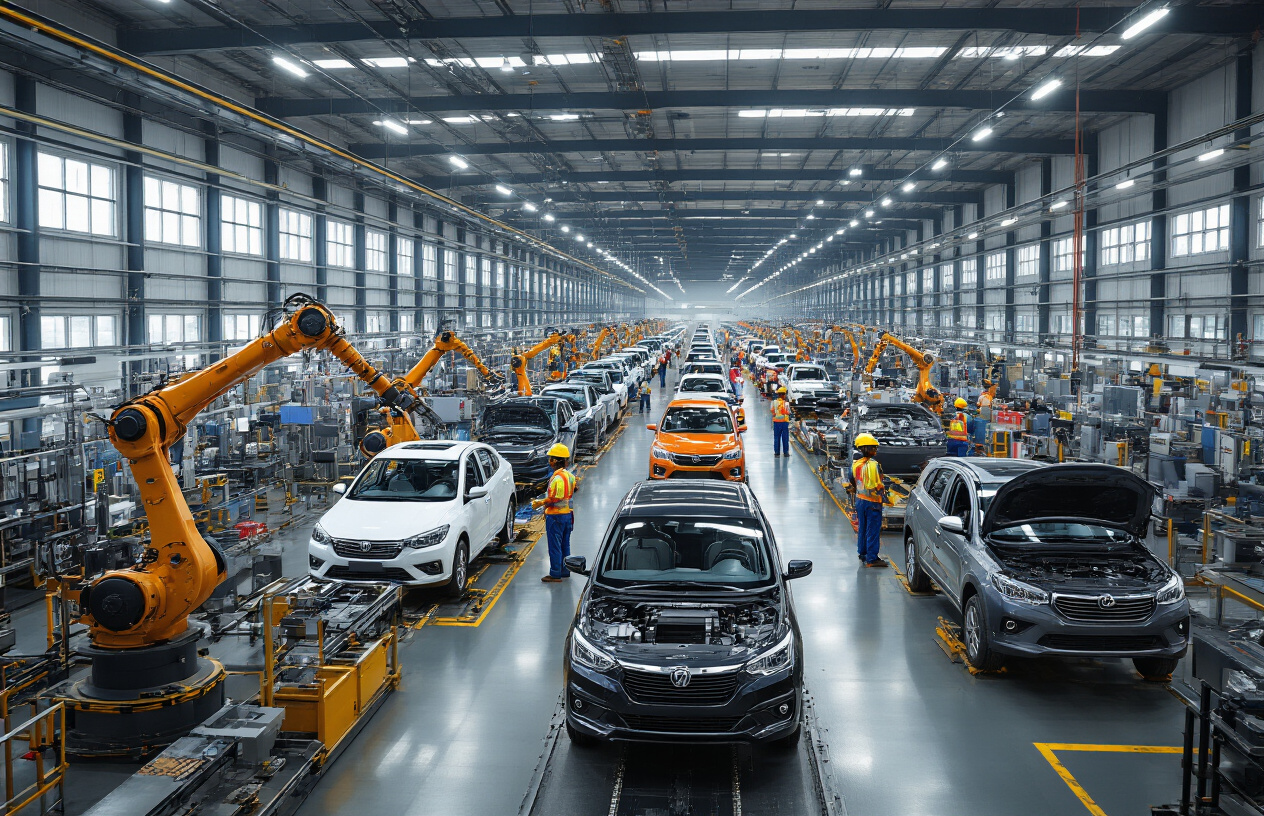
Maruti Suzuki’s expansion into European markets with compact cars
Maruti Suzuki has transformed from India’s domestic car leader into a serious export player, with European markets becoming increasingly important for the company’s compact car strategy. The automaker’s Baleno hatchback has gained significant traction across European dealerships, leveraging India’s cost-effective manufacturing capabilities to compete with established European brands.
The company’s Gujarat facility serves as the primary export hub, shipping vehicles to markets including Netherlands, Belgium, and Germany. Maruti’s success stems from producing vehicles specifically tailored to European preferences while maintaining competitive pricing through India’s lower production costs. Their compact SUV offerings, particularly the Brezza variant adapted for European roads, have captured market share in the growing small SUV segment.
Recent production data shows Maruti exporting over 280,000 units annually from India, with Europe accounting for approximately 35% of these shipments. The company’s strategy involves localizing features for European compliance while maintaining the fundamental design and engineering developed in India.
Tata Motors’ commercial vehicle exports gaining European traction
Tata Motors has emerged as a formidable force in European commercial vehicle markets, particularly in the light and medium-duty truck segments. The company’s European operations have seen remarkable growth, with exports from Indian manufacturing facilities increasing by 45% year-over-year.
European logistics companies have embraced Tata’s commercial vehicles due to their robust engineering and competitive total cost of ownership. The company’s Prima and Ultra ranges have found particular success in markets like Turkey, Poland, and Spain, where fleet operators prioritize reliability and fuel efficiency.
Tata’s approach involves manufacturing vehicles in India that meet stringent European emission standards, particularly Euro VI compliance. This strategy allows the company to offer European customers commercial vehicles at 20-25% lower prices compared to traditional European manufacturers while maintaining quality standards.
The company has established dedicated service networks across key European markets, ensuring spare parts availability and technical support. This comprehensive approach has resulted in repeat orders from major European fleet operators and logistics companies.
Hyundai and Kia leveraging India for global small car production
Hyundai and Kia have positioned their Indian manufacturing facilities as global production hubs for small cars and compact SUVs, with European markets receiving a substantial portion of India-made vehicles. Hyundai’s Chennai plant has become the company’s largest manufacturing facility outside South Korea, producing vehicles for over 88 countries.
The Korean automakers’ Indian facilities manufacture models specifically designed for global markets, including the i20 hatchback and Venue compact SUV. These vehicles combine Korean design and technology with India’s manufacturing cost advantages, creating competitive products for European consumers.
Kia’s Andhra Pradesh facility produces the Seltos and Sonet models for European markets, where compact SUVs have experienced explosive demand growth. The company has invested heavily in automation and quality control systems to ensure Indian-manufactured vehicles meet European safety and quality standards.
Both companies benefit from India’s skilled workforce and established automotive ecosystem. Their combined annual production capacity exceeds 1.5 million units, with approximately 40% designated for export markets. This scale allows them to achieve economies that wouldn’t be possible with smaller, market-specific facilities.
The success of these operations has prompted both Hyundai and Kia to announce additional investments in their Indian facilities, including electric vehicle production capabilities to serve emerging European demand for affordable electric mobility solutions.
Infrastructure Development Supporting Export Growth
Port Modernization Improving Vehicle Shipment Capabilities
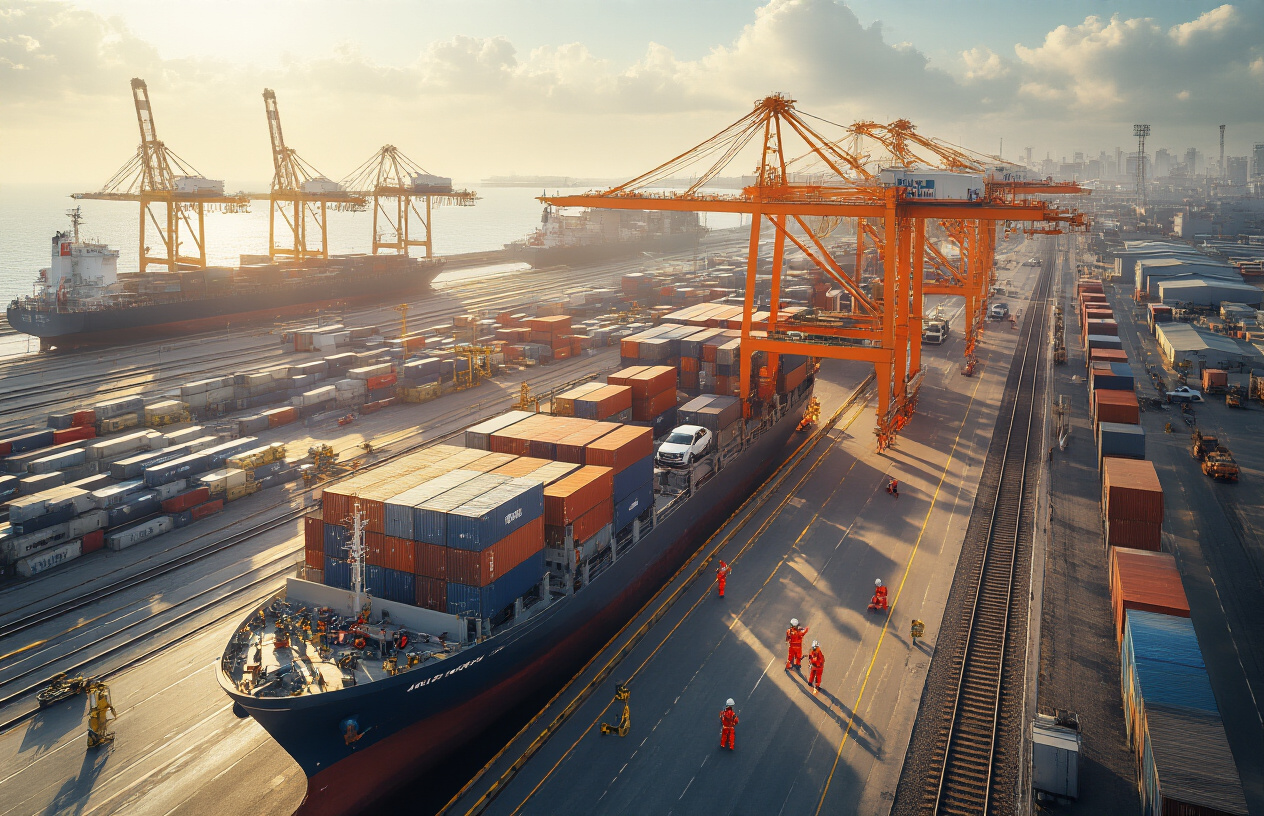
India’s ports are undergoing massive upgrades to handle the growing volume of automotive exports. The Jawaharlal Nehru Port Trust (JNPT) in Mumbai, the country’s largest container port, has expanded its vehicle handling capacity by 40% over the past three years. New ro-ro (roll-on, roll-off) terminals at major ports like Chennai, Kolkata, and Kandla now feature specialized ramps and parking areas designed specifically for cars and commercial vehicles.
These upgraded facilities can accommodate larger car carriers, with some ports now handling vessels carrying up to 8,000 vehicles at once. Advanced loading systems reduce the time needed to load a ship from several days to just 12-16 hours. The ports have also invested in weather-protected storage areas, keeping vehicles safe from monsoon rains and extreme heat while awaiting shipment.
Dedicated Freight Corridors Reducing Logistics Costs and Delivery Times
The Western Dedicated Freight Corridor (WDFC) and Eastern Dedicated Freight Corridor (EDFC) have revolutionized how vehicles move from factories to ports. These high-speed rail networks cut transportation time by 30-50% compared to traditional routes. A car manufactured in Chennai can now reach Mumbai port in 18 hours instead of the previous 36-48 hours.
The corridors feature double-stack container capabilities and can handle heavy automotive cargo trains. This efficiency translates to significant cost savings – logistics expenses have dropped by approximately 20-25% for many manufacturers. Companies like Maruti Suzuki and Hyundai report annual savings of millions of dollars thanks to these improved freight connections.
Quality Testing Facilities Meeting International Automotive Standards
India has rapidly expanded its automotive testing infrastructure to match global standards. The National Automotive Testing and R&D Infrastructure Project (NATRiP) has established world-class testing centers across the country. These facilities can perform crash tests, emission testing, and durability assessments that meet European, American, and Japanese safety requirements.
The Automotive Research Association of India (ARAI) in Pune and the International Center for Automotive Technology (ICAT) in Manesar now offer certification services recognized by international markets. Vehicle manufacturers no longer need to ship prototypes abroad for testing, saving both time and money. This local testing capability has become crucial for meeting stringent European emission norms and safety standards.
Automotive Clusters Creating Economies of Scale for Exporters
Strategic automotive clusters have emerged in Tamil Nadu, Karnataka, Haryana, and Maharashtra, creating powerful export ecosystems. The Chennai cluster alone houses over 40 major automotive companies and 400+ component suppliers within a 150-kilometer radius. This concentration allows for just-in-time delivery, reduced inventory costs, and seamless coordination between manufacturers and suppliers.
These clusters share common infrastructure like power substations, water treatment plants, and skilled labor pools. Component suppliers can serve multiple manufacturers simultaneously, spreading their fixed costs and offering competitive pricing. The proximity also enables rapid prototype development and faster response to changing export market demands.
Economic Impact and Future Growth Projections

Revenue Generation and Foreign Exchange Earnings Surge
India’s automotive export boom is delivering massive financial returns for the country’s economy. Auto exports have jumped from $14.5 billion in 2019 to over $22 billion in 2023, marking a 52% increase in just four years. This growth trajectory shows no signs of slowing down, with industry analysts predicting exports could reach $35 billion by 2027.
The foreign exchange earnings from automotive exports now represent nearly 6% of India’s total merchandise exports, making it one of the top five export categories. Major automakers like Maruti Suzuki, Hyundai, and Tata Motors are contributing billions in export revenues, with Maruti alone generating over $2.8 billion annually from overseas sales. Commercial vehicle exports add another $4.2 billion to the tally, while two-wheeler exports from companies like Bajaj Auto and TVS Motor contribute $3.6 billion.
These earnings are creating a positive ripple effect across India’s balance of payments. The steady inflow of foreign currency from auto exports helps stabilize the rupee and reduces the country’s dependence on traditional export sectors like textiles and pharmaceuticals.
Employment Creation Across Automotive Manufacturing Sectors
The automotive export surge is creating jobs at an unprecedented scale across India’s manufacturing landscape. Direct employment in automotive manufacturing has grown by 28% since 2020, with over 1.3 million people now working in export-oriented production facilities. This includes assembly line workers, quality control specialists, logistics coordinators, and skilled technicians managing advanced manufacturing equipment.
Auto component manufacturing represents the biggest job creator, employing over 2.1 million workers across 13,000+ component suppliers. These suppliers range from small machine shops producing basic parts to sophisticated facilities manufacturing electronic control units and advanced safety systems. Tier-1 suppliers like Motherson Sumi and Bharat Forge have expanded their workforce by 35% to meet growing export demand.
The employment impact extends beyond direct manufacturing jobs. For every manufacturing job created, economists estimate 2.5 additional jobs emerge in supporting sectors like transportation, warehousing, packaging, and professional services. Port cities like Chennai, Mumbai, and Mundra have seen significant job growth in automotive logistics, with specialized car carrier services employing thousands of drivers, mechanics, and port workers.
Skills development programs are also expanding rapidly. Companies are partnering with technical institutes to train workers in advanced manufacturing techniques, robotics operation, and quality management systems required for export markets.
Technology Transfer Opportunities Enhancing Domestic Capabilities
Global automakers setting up export-focused operations in India are bringing cutting-edge technologies that were previously unavailable in the domestic market. Hyundai’s Chennai facility now produces cars with advanced driver assistance systems (ADAS) for European markets, requiring Indian engineers to master sophisticated sensor integration and software calibration techniques.
Manufacturing technology transfers are particularly significant in electric vehicle production. Tata Motors’ partnership with Jaguar Land Rover has brought EV powertrain technologies to India, while MG Motor’s parent company SAIC has transferred battery management system expertise to its Indian operations. These technologies are gradually being adapted for domestic EV models, accelerating India’s electric mobility transition.
Component manufacturers are experiencing major technology upgrades through their export partnerships. Sona Comstar has acquired precision gear manufacturing technologies through its European customers, while Samvardhana Motherson has gained expertise in lightweight materials and advanced composites. These capabilities strengthen India’s position in the global automotive value chain.
Research and development capabilities are expanding as automakers establish technical centers to support their export operations. Mahindra’s new R&D facility in Chennai focuses on developing export-specific variants, while Bajaj Auto has created dedicated teams for adapting products to international emission and safety standards.
Projected Export Volume Growth and Market Expansion Targets
Industry projections paint an optimistic picture for India’s automotive export future. The Society of Indian Automobile Manufacturers (SIAM) forecasts passenger vehicle exports will reach 1.2 million units by 2027, up from 700,000 units in 2023. Commercial vehicle exports are expected to grow even faster, targeting 350,000 units annually by 2026.
Two-wheeler exports present the most aggressive growth targets, with manufacturers aiming to export 6.5 million units by 2028. This represents a doubling of current export volumes, driven primarily by demand from Africa, Latin America, and Southeast Asia. Electric two-wheeler exports are projected to account for 15% of total volume by 2027.
Geographic diversification is accelerating beyond traditional European markets. African markets are becoming increasingly important, with exports to Nigeria, Kenya, and South Africa growing by over 180% in the past two years. Latin American countries like Mexico, Colombia, and Chile are emerging as significant destinations for Indian-made vehicles.
The government’s Production Linked Incentive (PLI) scheme has set ambitious targets for automotive exports to reach $50 billion by 2030. This includes $15 billion from passenger vehicles, $12 billion from commercial vehicles, $18 billion from auto components, and $5 billion from electric vehicles. Auto component exports alone are projected to grow at 22% annually, reaching new markets in North America and Australia.
Market expansion strategies focus heavily on right-hand drive countries where Indian vehicles have natural advantages. Australia has become a key target market, with several Indian manufacturers planning dedicated export programs. Similarly, markets in Southeast Asia and Africa present significant opportunities for volume growth in the coming years.
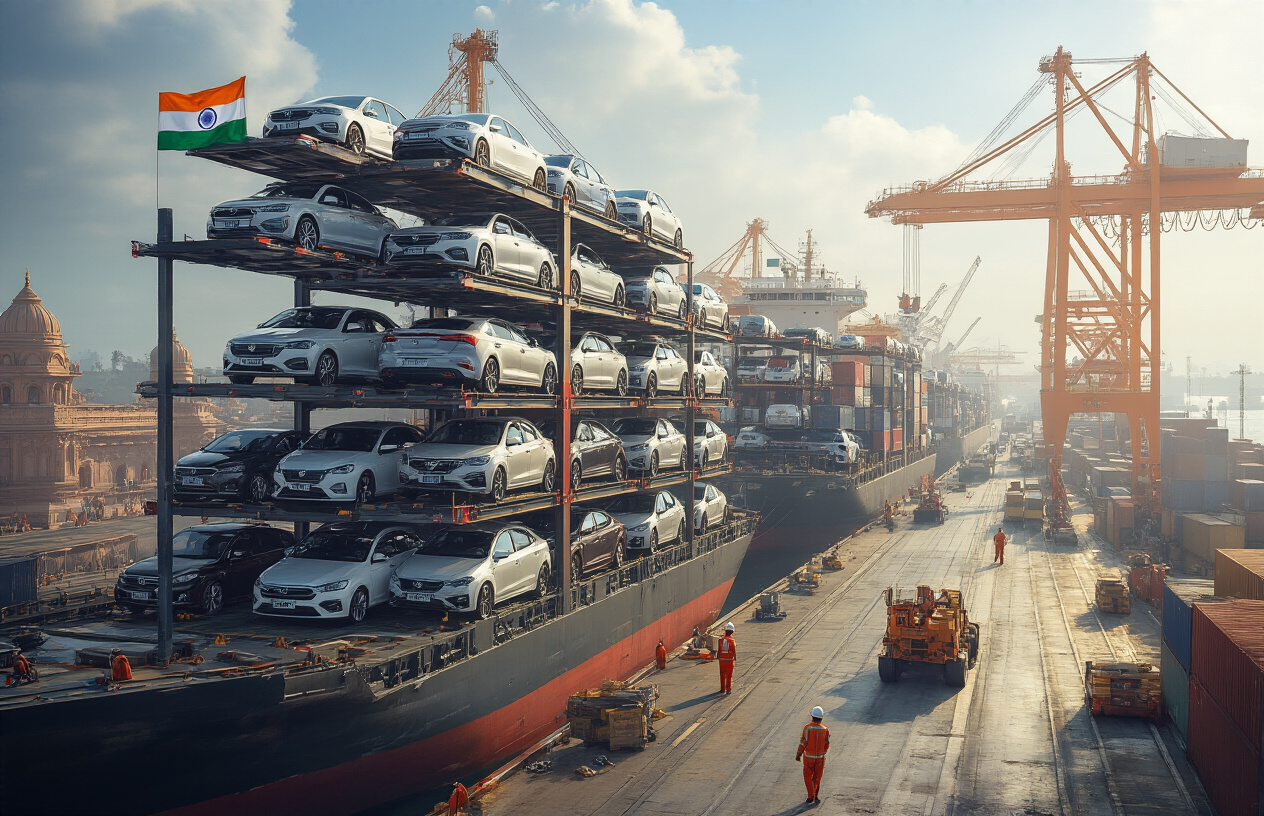
India’s automotive sector has transformed into a global export powerhouse, with manufacturers leveraging the country’s cost advantages, skilled workforce, and robust infrastructure to serve international markets. The surge in shipments to Europe demonstrates how Indian factories have become trusted suppliers for major automakers who are setting up large-scale production facilities to meet growing overseas demand.
This shift brings significant economic benefits to India through job creation, increased foreign investment, and stronger trade relationships with key markets. As infrastructure continues to improve and more global brands establish their manufacturing presence, India is well-positioned to become an even more dominant force in automotive exports. The country’s journey from primarily serving domestic needs to becoming a critical link in the global automotive supply chain shows just how competitive Indian manufacturing has become on the world stage.